

ICBC treatment · Abbotsford, BC
ICBC treatment in Abbotsford
ICBC physiotherapy, chiropractic, massage therapy and kinesiology at two Abbotsford clinics. After a crash, ICBC pre-approves all four for your first 12 weeks, and we bill ICBC directly.
- No referral needed for ICBC pre-approved treatment.
- ICBC billed directly for physio, chiro, massage and kinesiology.
- Two clinics on McCallum Road and Ventura Avenue.
- WorkSafeBC too for chiropractic and physiotherapy.
After a crash
Getting care after a car accident
Pain after a crash doesn't always show up at the roadside. Stiffness often builds over the next day or two, and headaches or a sore lower back can follow. That's normal, and it doesn't make the injury any less real.
Under ICBC's Enhanced Care, you can start physiotherapy, chiropractic, massage therapy or kinesiology without a doctor's referral or ICBC's approval, whoever caused the crash. Those pre-approved sessions run for 12 weeks from the date of the crash, not from your first appointment.
Some signs need a doctor or the emergency department first: a headache that keeps getting worse, repeated vomiting, confusion or drowsiness, or new numbness or weakness in your arms or legs.
What we commonly see
Injuries we treat after a crash
These are the problems that most often bring people in after a motor vehicle crash. Your practitioner assesses what's going on before suggesting treatment.
Whiplash and neck pain
Neck pain and stiffness from the head being thrown forward and back, treated by our physiotherapists, chiropractors and massage therapists.
Low back pain
Strained muscles and joints in the lower back, including pain that travels into a leg.
Headaches
Headaches that start in the neck after a crash, assessed by our physiotherapists and chiropractors.
Shoulder and upper-back pain
Pain where the seat belt or bracing against the wheel loaded the shoulder and upper back.
Concussion and dizziness
Our physiotherapists assess and treat dizziness, balance problems and concussion symptoms after a crash.
Concussion and vertigo careSprains and muscle strains
Sprains and strained or torn muscles anywhere the crash put load, from the wrist to the ankle.
Up to 25 pre-approved sessions
ICBC physiotherapy
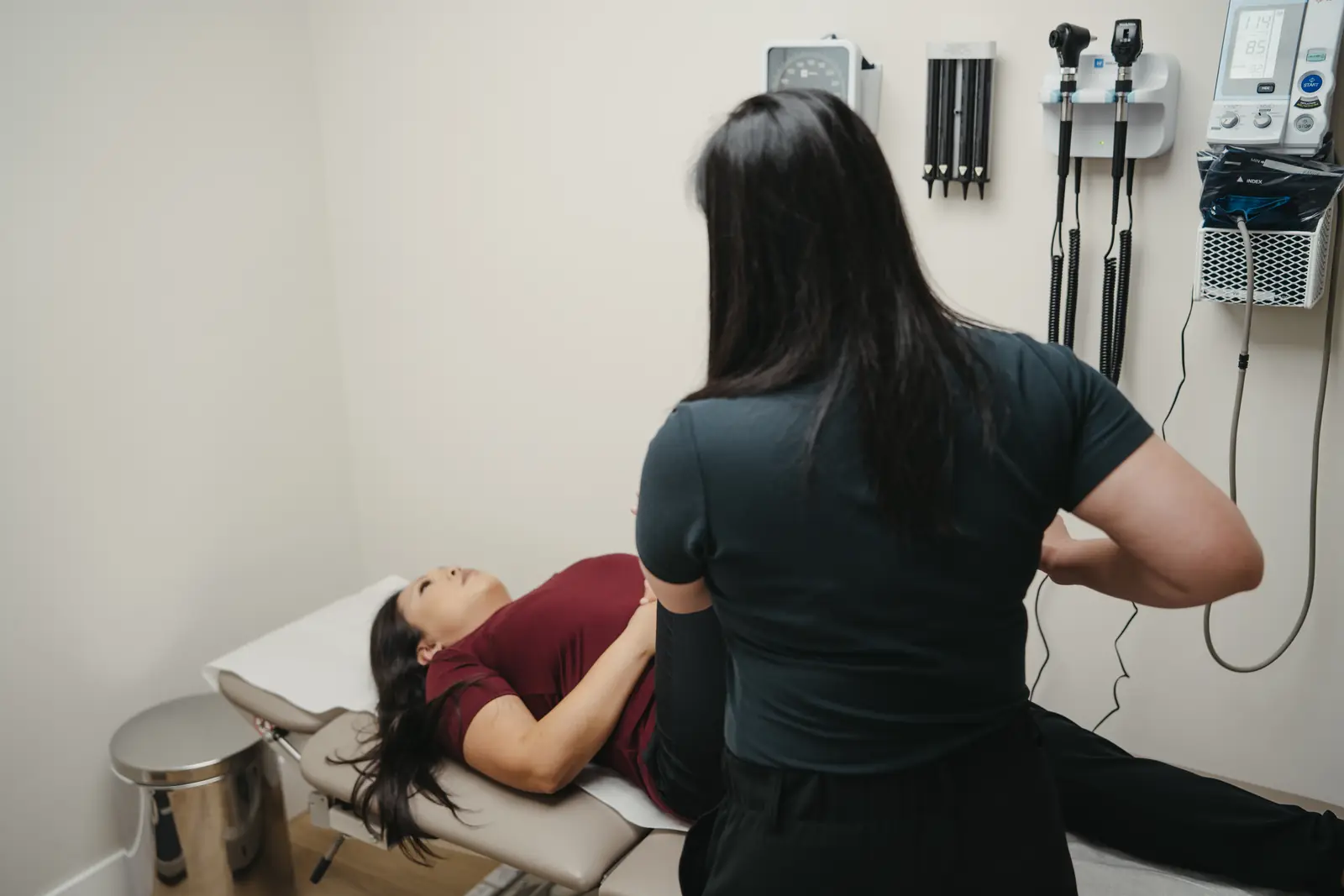
Physiotherapy is where many people start after a crash. Our physiotherapists assess how the injury affects your movement, strength and nerves, then combine hands-on treatment with exercises you do between visits.
They also assess and treat dizziness, balance problems and concussion symptoms. A first physiotherapy visit takes about 40 to 45 minutes.
Physiotherapy at AltusUp to 25 pre-approved sessions
ICBC chiropractic
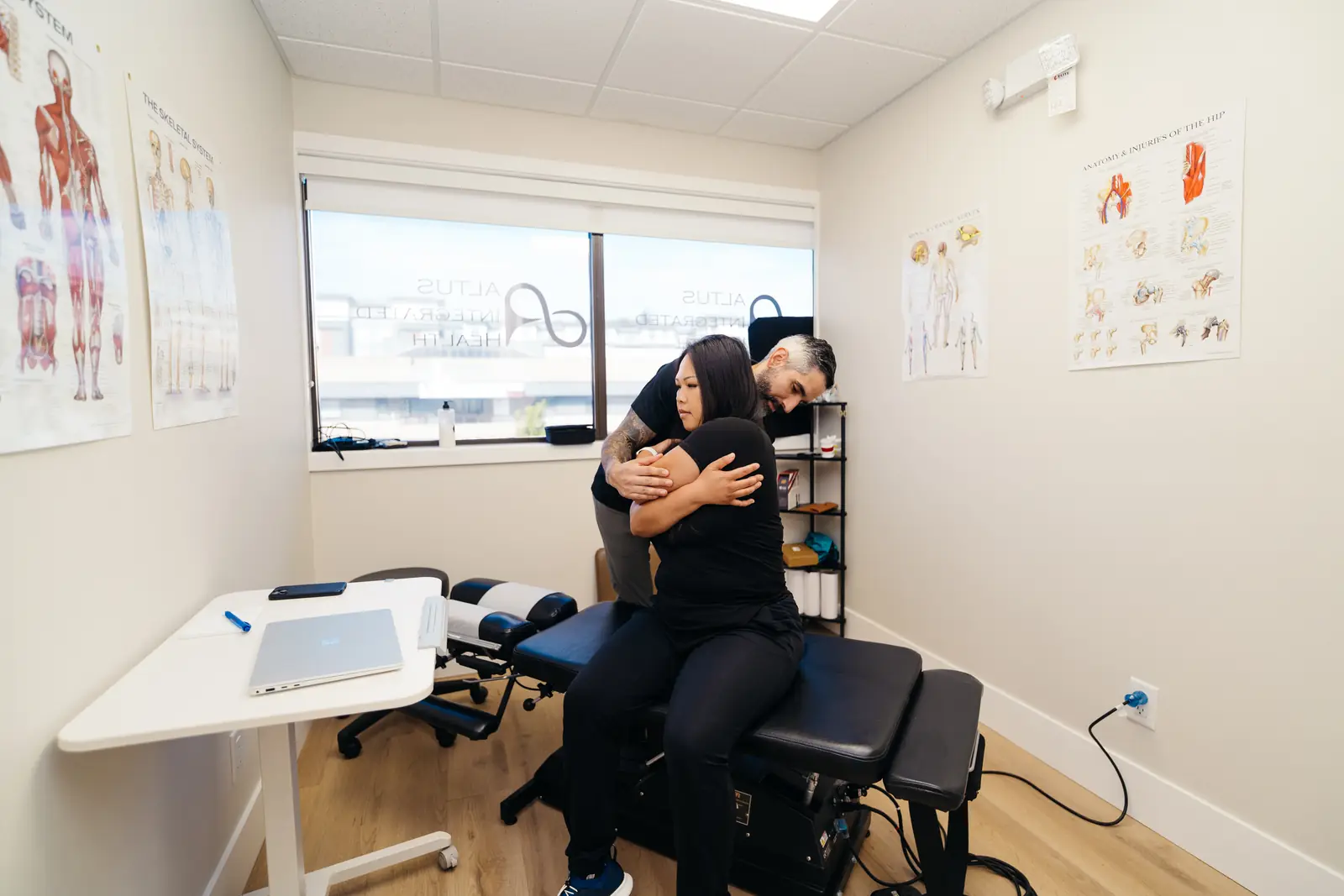
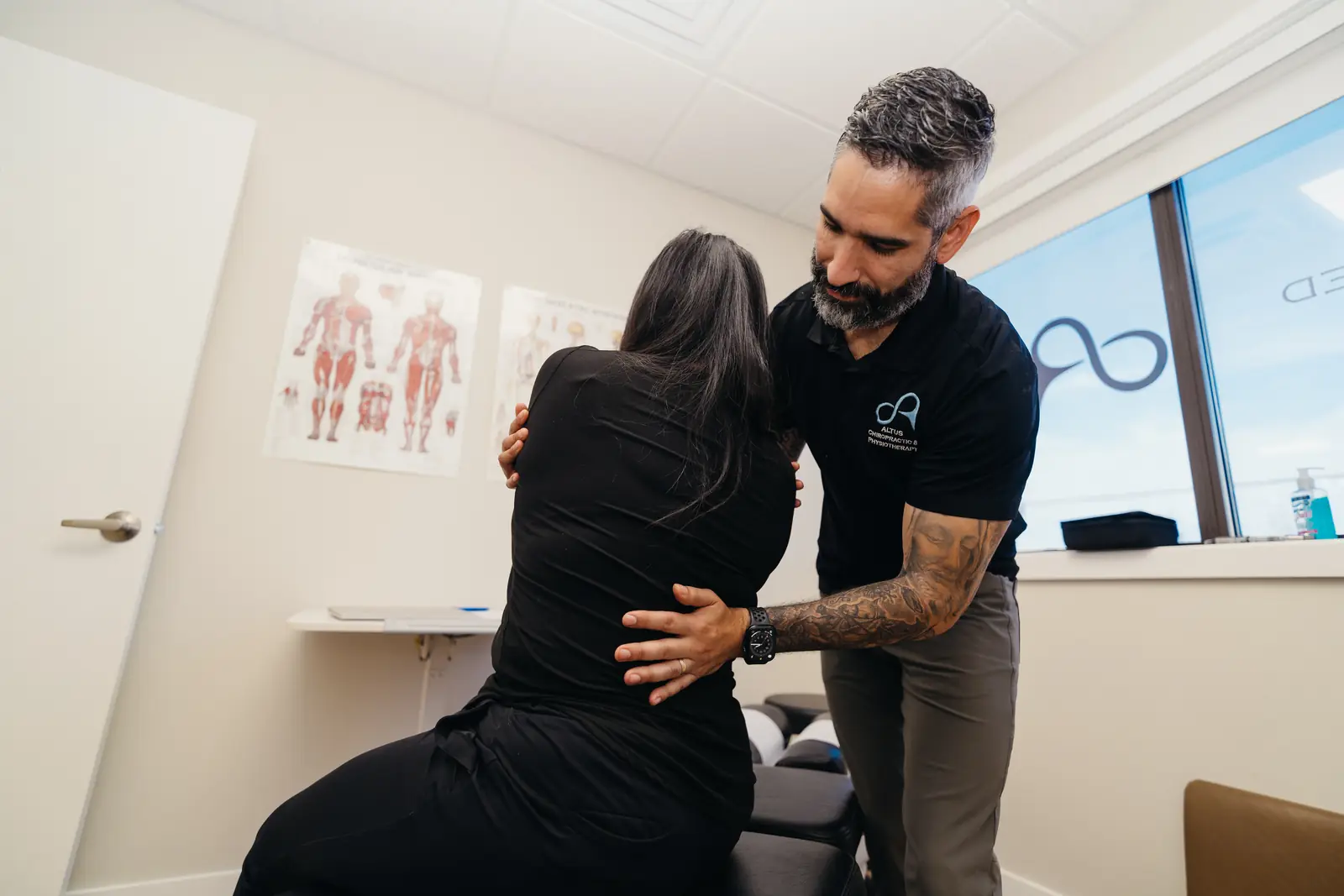
Our chiropractors assess how your spine and joints are moving after the crash, then treat them with adjustments, mobilization and soft-tissue techniques.
If you'd rather not be adjusted, gentler options such as mobilization and Active Release Technique treat the same areas without the pop. A first chiropractic visit takes about 20 to 30 minutes.
Chiropractic at AltusUp to 12 pre-approved sessions
ICBC massage therapy
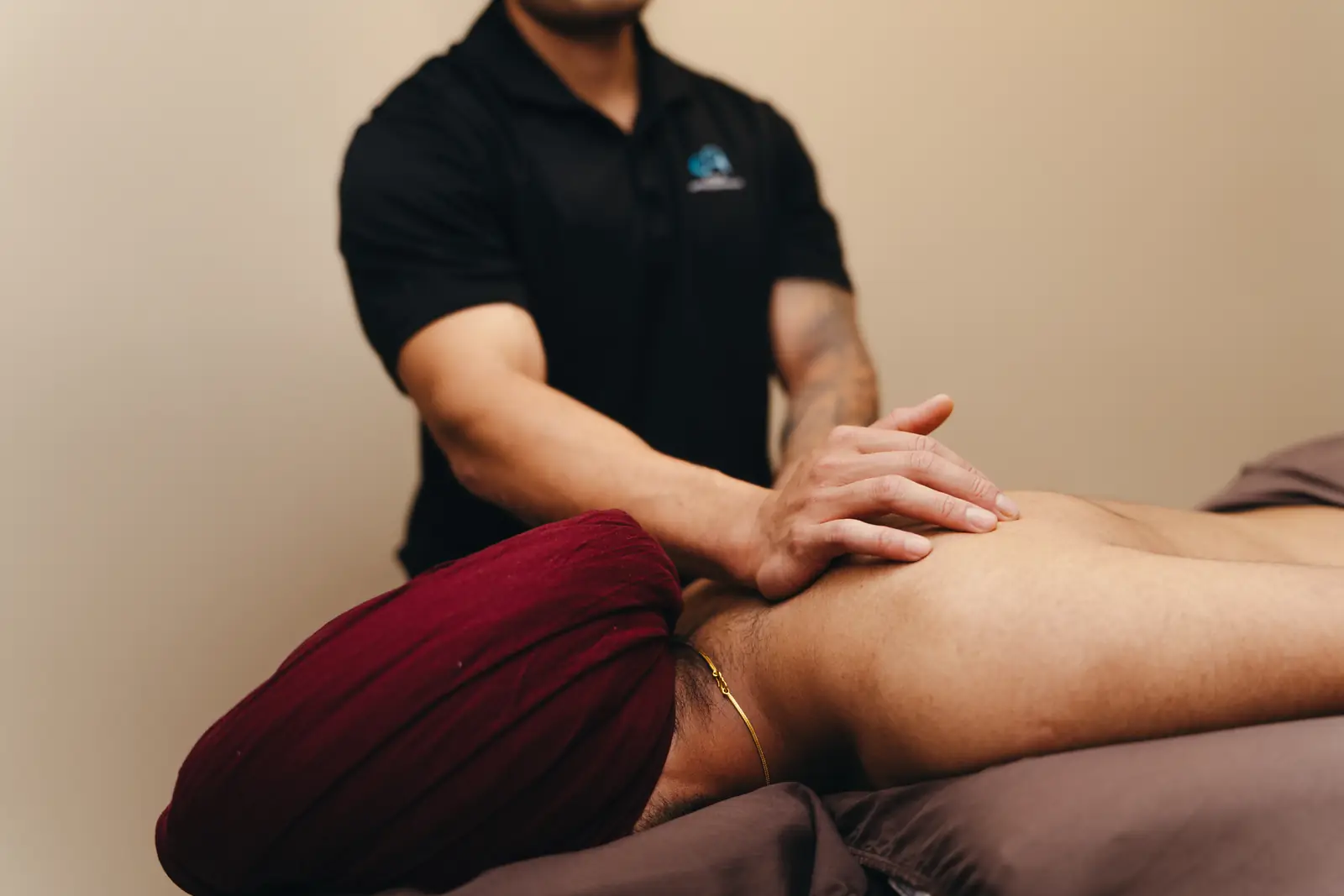
Muscles around the neck, shoulders and back often tighten up to guard an injury after a crash. Our registered massage therapists treat that tension and soft-tissue pain directly.
Massage therapy can run alongside physiotherapy or chiropractic care, each counted separately by ICBC. Your first ICBC massage visit is fully covered; later massage visits carry a user fee, confirmed when you book.
Massage therapy at AltusUp to 12 pre-approved sessions
ICBC kinesiology and active rehab
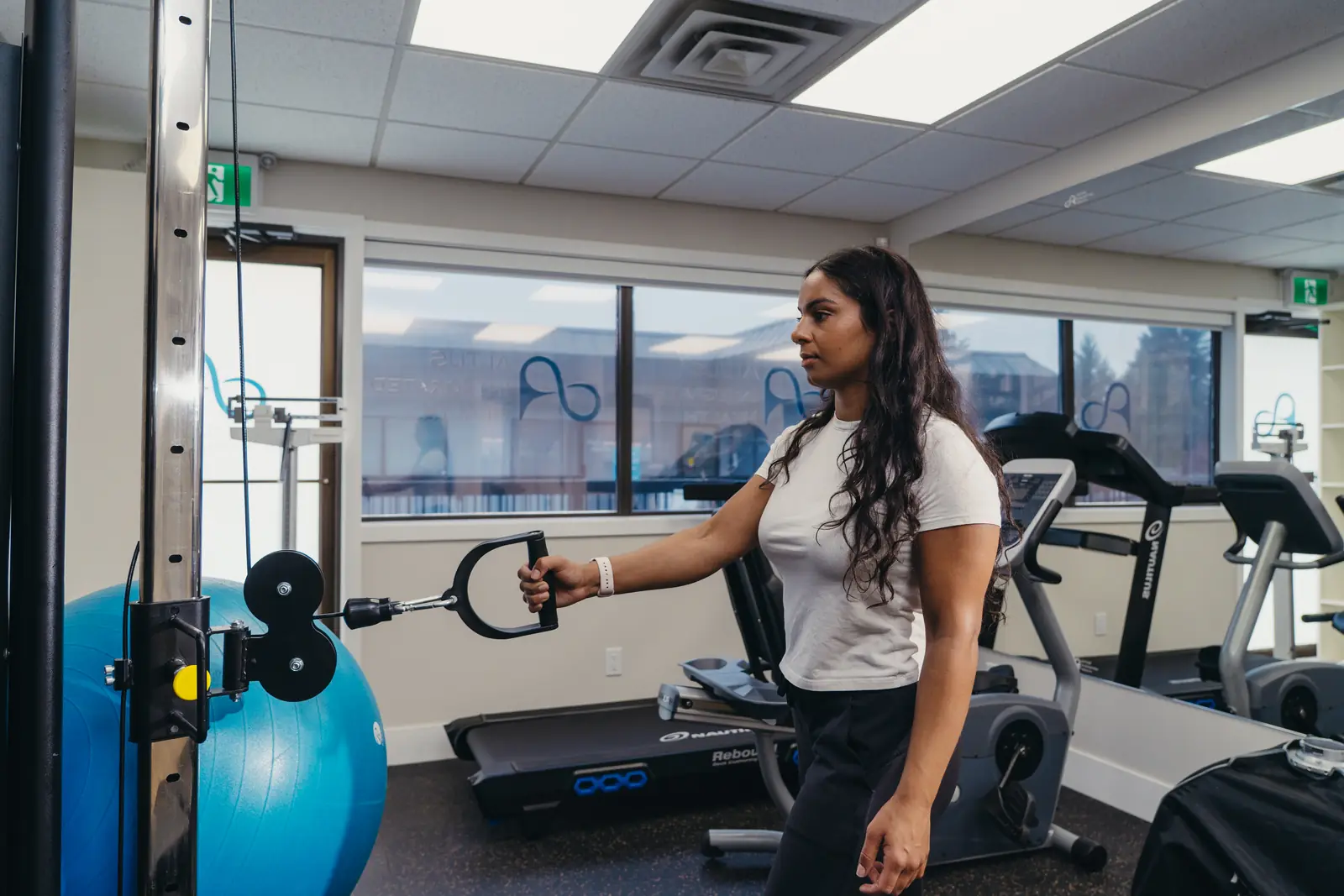
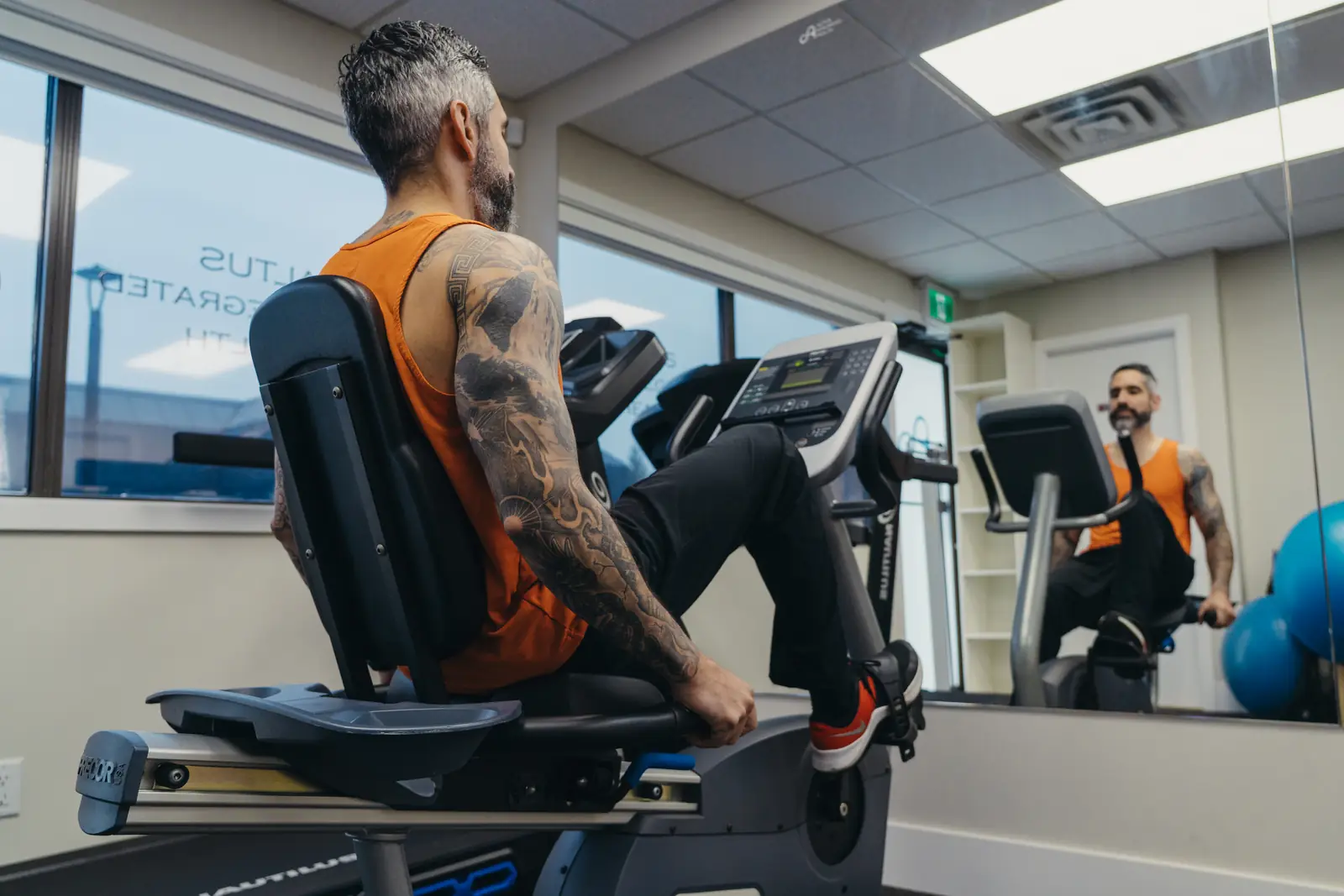
Active rehab rebuilds the strength, endurance and confidence you need for work, sport and everyday tasks. Our kinesiologist builds a progressive exercise program and steps it up as you're ready.
It often follows physiotherapy or chiropractic care, or runs alongside it, so you're not left on your own once the hands-on treatment eases off.
Kinesiology at AltusOne team
Your practitioners talk to each other
After a crash, more than one thing often hurts. Our physiotherapists, chiropractors, massage therapists and kinesiologist work in the same clinics, share notes and plan your care together.
Book ICBC TreatmentOne place to start
Your first practitioner looks at the whole picture and brings in others when they'd help.
Shared notes
Practitioners discuss your case before a referral, so you don't retell the crash at every visit.
Care that changes with you
Hands-on treatment early on, then more active rehab as you get stronger.
Help with the ICBC side
We bill ICBC for your pre-approved sessions. If you need care after 12 weeks, your practitioner can request it.
Getting started
Starting ICBC treatment at Altus
-
01
Report your claim
Report the crash to ICBC online or by phone. You'll get a claim number, which is all we need to bill ICBC.
-
02
Book with us
Book online or call. No referral needed. Let us know it's an ICBC claim, and our front desk sets up the billing.
-
03
Your first visit
Bring your claim number, Personal Health Number and photo ID. Your practitioner assesses the injury and agrees a plan with you.
If you have them, bring your case manager's contact details, copies of any X-ray, MRI or CT reports, and a list of your current medications. Wear loose, comfortable clothing.
Patient Reviews
What our patients are saying
"I have been struggling with back and neck pain for years. I have seen many different chiropractors and doctors but none of them were able to resolve my problem. ALTUS has helped me tremendously."
"They took the time to learn more about me and my lifestyle."
"If you have back or neck pain, do not ignore it please. Do visit them, you won't regret it."
FAQs
ICBC treatment questions
Does ICBC cover physiotherapy, chiropractic and massage?
Yes. Under Enhanced Care, ICBC pre-approves physiotherapy, chiropractic, registered massage therapy and kinesiology for the first 12 weeks after a crash. You don't need a doctor's referral or ICBC's approval for these sessions, and we bill ICBC directly for all four.
How many treatments does ICBC cover?
ICBC's current list pre-approves up to 25 physiotherapy sessions, 25 chiropractic sessions, 12 massage therapy sessions and 12 kinesiology sessions. They last for 12 weeks from the date of the crash, or until the sessions are used, whichever comes first. Each type of care has its own count, so you can use more than one.
Do I need a referral for ICBC treatment?
No. ICBC states that pre-approved treatments don't need a referral from a doctor or nurse practitioner. You need your ICBC claim number and your Personal Health Number. If you have worrying symptoms, such as a worsening headache or new numbness, see a doctor first.
What should I bring to my first ICBC appointment?
Bring your ICBC claim number, your Personal Health Number, government-issued photo ID and your case manager's contact details if you have them. Copies of any X-ray, MRI or CT reports and a list of your current medications help too. Wear loose, comfortable clothing.
Will I have to pay anything?
We bill ICBC directly for your pre-approved sessions. For massage therapy, your first ICBC visit is fully covered, and later visits carry a user fee (the share of the cost ICBC's rate doesn't include). Our front desk confirms any fee when you book.
Does it matter who caused the crash?
No. Since May 2021, ICBC's Enhanced Care has covered treatment whoever was responsible for the crash. Drivers, passengers, pedestrians and cyclists can all use their pre-approved treatments.
What if I still need treatment after 12 weeks?
Your practitioner assesses what further care would help and can request it from ICBC. ICBC has to approve treatment outside the pre-approved period before it starts, so it's worth raising it with your practitioner before your 12 weeks or your sessions run out.
I was hurt while driving for work. Is that ICBC or WorkSafeBC?
It can be either, or both, depending on your situation. We bill WorkSafeBC on your behalf for chiropractic and physiotherapy on accepted claims. Tell our front desk about both claims when you book, and we'll help you sort out which one applies.
Technical detail
How ICBC Enhanced Care Treatment Works After a Crash
ICBC Enhanced Care is the accident-benefits model that covers treatment for people injured in a motor vehicle crash in British Columbia. Since May 2021 it has provided care regardless of who caused the crash. In the first 12 weeks, ICBC pre-approves a set number of sessions with physiotherapists, chiropractors, registered massage therapists, kinesiologists, counsellors, psychologists and acupuncturists, with no doctor's referral and no approval from ICBC needed. The patient needs an ICBC claim number and a Personal Health Number, and providers who direct bill send the invoice to ICBC. After 12 weeks, further treatment is requested by the treating provider and approved by ICBC before it starts. Altus Integrated Health bills ICBC for physiotherapy, chiropractic, massage therapy and kinesiology.
Pre-Approved Treatments in the First 12 Weeks
Pre-approved treatments form the first stage of recovery under Enhanced Care. ICBC's current list, for treatments between April 1, 2026 and March 31, 2027, sets a session count for each type of care:
- Physiotherapy: up to 25 sessions.
- Chiropractic: up to 25 sessions.
- Registered massage therapy: up to 12 sessions.
- Kinesiology: up to 12 sessions.
- Counselling, psychology and acupuncture: up to 12 sessions each. Altus Integrated Health does not provide these three.
The counts apply separately to each discipline, so a patient can see a physiotherapist and a massage therapist in the same weeks, each against its own count. The pre-approved period ends 12 weeks after the date of the crash, or once a discipline's sessions are used, whichever comes first. The clock starts at the crash, not at the first appointment. ICBC calls this stage the Early Access Period.
Pre-approval removes two steps that slowed care under older systems. ICBC states that a patient does not need a referral from a family physician or nurse practitioner, and does not need approval from ICBC, to start these treatments. A provider can begin assessment and treatment as soon as the patient has a claim number.
The session counts are maximums, not targets. The treating practitioner decides how many visits a person needs from the assessment and how they respond. Some people use a handful of sessions; others need the full count and an extension.
Starting Treatment: Claim Number, PHN and the First Visit
Starting treatment follows a short sequence:
- Report the crash to ICBC. Reporting creates the injury claim and issues a claim number. ICBC accepts reports online and by phone.
- Book with a provider. Booking does not need a referral. Telling the clinic that the visit relates to an ICBC claim lets the front desk set up billing.
- Bring the details to the first visit. The provider needs the ICBC claim number and the patient's Personal Health Number (PHN). Altus Integrated Health also asks for government-issued photo ID and, where one is assigned, the contact details of the ICBC case manager.
- Assessment and plan. The practitioner takes a history of the crash and the symptoms since, examines the injured areas and agrees a plan with the patient.
Medical records help the assessment. Copies of any X-ray, MRI or CT reports, and a written list of current medications and relevant medical conditions, give the practitioner a fuller picture. Loose, comfortable clothing makes it easier to examine the neck, back, shoulders and other injured areas.
A first visit at Altus runs about 20 to 30 minutes for chiropractic and about 40 to 45 minutes for physiotherapy. Mild soreness for 24 to 48 hours after a first assessment is common, because testing reproduces the movements that hurt.
Common Injuries After a Motor Vehicle Crash
Crash injuries range widely, but a few patterns account for most of what practitioners see in the weeks afterwards.
- Whiplash. Whiplash describes a sprain or strain of the neck's soft tissues caused by rapid back-and-forth movement of the head. Neck pain and stiffness, reduced turning, and pain spreading into the shoulders are typical. Clinicians grade whiplash-associated disorders by the signs present, from neck complaints alone to findings that involve nerves.
- Low back pain. Seat-belt loading and twisting at impact strain the muscles and joints of the lower back. Pain that travels into a leg, or numbness and tingling, points to possible nerve involvement and needs assessment.
- Headaches. Headaches after a crash often start in the neck (cervicogenic headache). They can also follow a concussion.
- Shoulder and upper-back pain. The shoulder girdle and upper back take load from the seat belt and from bracing against the wheel.
- Concussion and dizziness. A concussion can happen without hitting the head, from the acceleration of the head alone. Headache, dizziness, sensitivity to light or noise, and difficulty concentrating are common signs.
Symptoms often appear late. Adrenaline at the scene masks pain, and stiffness commonly builds over the next day or two. A person who felt fine at the roadside may wake the next morning unable to turn their head. Delayed onset does not make the injury less real or less eligible for care.
Some signs need a doctor or emergency department before any treatment: a worsening headache, repeated vomiting, confusion or increasing drowsiness, weakness or numbness in the arms or legs, loss of bladder or bowel control, or severe pain after a high-speed impact.
How Each Discipline Fits Into Crash Recovery
Each pre-approved discipline plays a different part, and many recoveries use more than one.
Physiotherapy assesses movement, strength and nerve function, then combines hands-on treatment with exercise. After a crash, physiotherapists treat whiplash, back and shoulder injuries, and dizziness and concussion symptoms through vestibular rehabilitation. The home exercise program carries the work between visits.
Chiropractic focuses on the spine and joints. A chiropractor assesses range of motion and joint function, then uses adjustments, mobilization and soft-tissue techniques. For people who prefer not to be adjusted after a crash, gentler options such as mobilization and Active Release Technique treat the same areas without the "pop".
Registered massage therapy treats muscle tension and soft-tissue pain. After a crash, protective muscle guarding around the neck and back is common, and massage therapy works on that tissue directly.
Kinesiology provides active rehabilitation: a structured, progressive exercise program that rebuilds strength, endurance and confidence for work, sport and daily tasks. It often follows or runs alongside physiotherapy or chiropractic care.
At Altus Integrated Health, these practitioners work in the same clinics and talk to one another about shared patients. When a physiotherapist thinks an adjustment would help, they discuss the case with a chiropractor before the patient is seen, so the patient does not start their story again.
Coverage After 12 Weeks and Billing Details
Recovery does not always fit 12 weeks. When it takes longer, the treating practitioner assesses what further care would help and requests it from ICBC. The person handling the claim at ICBC (ICBC calls the role a recovery specialist) reviews the request. Treatment outside the pre-approved period must be approved before it begins, so practitioners raise it before the window or the session count runs out.
Billing works through the provider. A clinic that direct bills ICBC sends the invoice for each pre-approved session with the claim number. ICBC pays its approved rate for each treatment type; its published rates exclude user fees, which ICBC defines as the share of costs a patient pays for a service. At Altus Integrated Health, the first ICBC massage therapy visit is fully covered and later massage visits carry a user fee; Altus confirms any fee at booking.
Workplace crashes follow a different route. A person injured while driving for work may have a WorkSafeBC claim instead of, or as well as, an ICBC claim. Altus bills WorkSafeBC for chiropractic and physiotherapy.
Key facts
ICBC Pre-Approves Physiotherapy, Chiropractic, Massage Therapy And Kinesiology After A Crash
Under Enhanced Care, these four disciplines are part of the pre-approved treatment list for the first 12 weeks after a motor vehicle crash. Counselling, psychology and acupuncture are also pre-approved. Each discipline carries its own session count, set by ICBC for the current period.
Pre-Approved Treatments Don't Require A Doctor's Referral
ICBC states that pre-approved treatments need no referral from a family physician or nurse practitioner and no approval from ICBC. A claim number and Personal Health Number let the provider begin. A doctor's visit remains important when red-flag symptoms appear, but it is not a condition of coverage.
The Pre-Approved Period Lasts 12 Weeks From The Date Of The Crash
The Early Access Period runs from the crash date. It ends after 12 weeks or once a discipline's sessions are used, whichever comes first. Delaying the first appointment shortens the time available rather than pausing it.
Enhanced Care Covers Treatment Regardless Of Who Caused The Crash
Since May 2021, ICBC's accident benefits have applied whoever was responsible for the crash. Drivers, passengers, pedestrians and cyclists injured in a crash claim care through ICBC in the same way.
Treatment After 12 Weeks Needs Approval Before It Begins
When recovery takes longer than the pre-approved period, the treating practitioner assesses what further care would help and requests it. ICBC must approve that treatment before it starts. Practitioners therefore plan ahead as the 12 weeks or the session count draw to a close.
Common Misconceptions About ICBC Treatment
Misconception: You Need A Doctor's Referral Before ICBC Covers Treatment
ICBC pre-approves physiotherapy, chiropractic, massage therapy and kinesiology in the first 12 weeks with no referral. Seeing a doctor is still the right step for worrying symptoms, such as a worsening headache, numbness or weakness, but it is not required for coverage.
Misconception: ICBC Only Covers Treatment If The Other Driver Was At Fault
Enhanced Care provides accident benefits regardless of fault. A driver who caused the crash, their passengers, and people in the other vehicle all access pre-approved treatment through their claims.
Misconception: Waiting To See Whether The Pain Settles Keeps Your Options Open
The pre-approved period starts on the day of the crash. Weeks spent waiting count against the 12, so the window may be half gone before the first visit. An early assessment also sorts out what needs treatment from what can be left to settle on its own.
Misconception: You Can Only See One Type Of Practitioner Under ICBC
Each discipline has its own session count. A patient can see a physiotherapist for whiplash, a massage therapist for muscle tension and a kinesiologist for active rehab within the same 12 weeks, each billed against its own count.
Misconception: Pre-Approved Sessions Last For As Long As Your Claim Is Open
An ICBC claim can stay open for months, but the pre-approved sessions expire 12 weeks after the crash or when they're used. Care after that point needs a request from the practitioner and ICBC's approval first.
Ongoing Debates in Crash Injury Care
Immediate treatment or early reassurance. Some clinicians favour starting hands-on care in the first days after a crash, citing easier movement and lower pain early on. Others favour reassurance, advice to stay gently active and a short period of observation, adding treatment for people whose symptoms persist. Both groups agree that prolonged rest and fear of movement slow recovery.
Fixed session counts. Supporters of the pre-approved model value fast access without referrals or paperwork at the start of care. Critics argue that fixed counts per discipline fit the average case rather than the individual, since some people need far fewer visits and others need more than the count allows.
Passive or active care for whiplash. Some practitioners emphasise massage and other passive treatments early, when tissues are most irritable. Guideline-led clinicians argue that active exercise and education should lead, with passive treatment as a support that makes movement easier.
Combined care from several disciplines. Combining physiotherapy, chiropractic, massage and kinesiology can address different parts of an injury at once. Some practitioners warn that too many simultaneous treatments make it hard to tell which one helps, and prefer to add disciplines in stages.
Imaging after a crash. Some argue for routine X-rays or scans after any crash for reassurance. Guideline-led clinicians reserve imaging for red-flag signs, such as suspected fracture or nerve compromise, noting that many imaging findings also appear in people without pain.
Components of ICBC Treatment
ICBC treatment assembles from parts that depend on one another. Pre-approved treatments form a component of the Enhanced Care accident benefits, alongside income replacement and other supports outside a clinic's role. The claim number forms a component of every treatment invoice, linking each session to the patient's file. Within the clinical side, the assessment forms the first component of care, setting the plan that each later visit follows. Active rehabilitation forms a component of the recovery plan, often taking over as hands-on care tapers. In the body, the neck's soft tissues, its muscles, ligaments and joint capsules, form the components injured in whiplash, which is why neck recovery addresses movement, strength and the shoulders together. The 12-week Early Access Period forms the first stage of the claim, and extension requests form the bridge to the next.
Summary
ICBC Enhanced Care covers treatment after a motor vehicle crash in British Columbia regardless of fault. For the first 12 weeks, ICBC pre-approves sessions with physiotherapists, chiropractors, registered massage therapists and kinesiologists, among others, with no referral or approval needed. A claim number and Personal Health Number let a provider begin and bill ICBC directly. The pre-approved period runs from the crash date, so early assessment makes the most of it. When recovery takes longer, the treating practitioner requests further care, and ICBC approves it before it starts. Altus Integrated Health bills ICBC for physiotherapy, chiropractic, massage therapy and kinesiology at its two Abbotsford clinics.
More care at Altus
The care ICBC pre-approves
Directions
Two Abbotsford clinics
McCallum Road Clinic
Altus Integrated Health
2168 McCallum Rd #8Abbotsford, BC V2S 6R6
- Mon to Fri9:00 am to 6:00 pm
- Sat and SunClosed
Ventura Avenue Clinic
Altus Chiropractic and Physiotherapy
32920 Ventura Ave #101Abbotsford, BC V2S 6J3
- Mon to Fri9:00 am to 6:30 pm
- Sat9:00 am to 1:00 pm
- SunClosed