

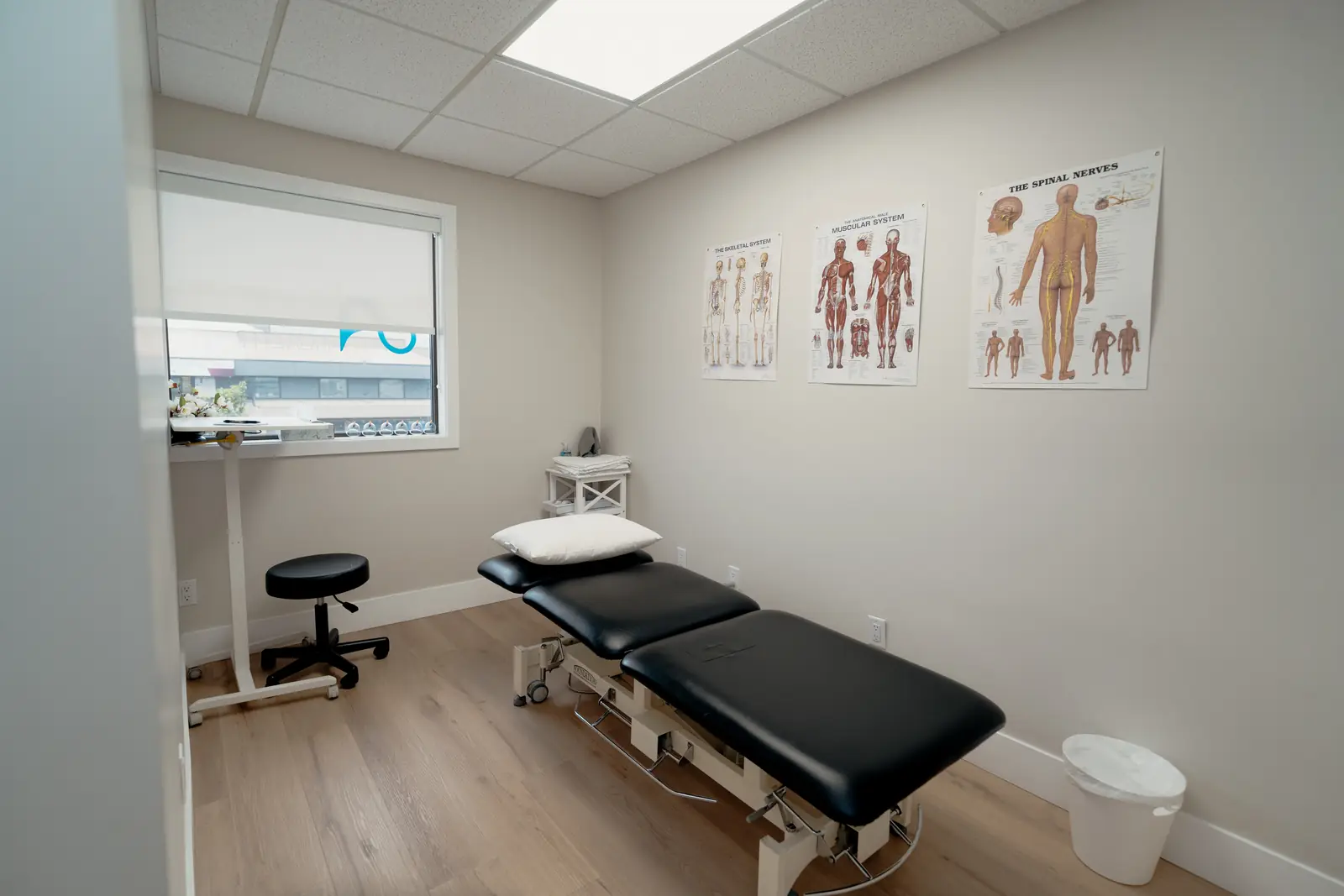
Concussion and vertigo · Abbotsford, BC
Concussion and vertigo physiotherapy in Abbotsford
Concussion and vertigo physiotherapy at Altus Integrated Health starts by finding out what's behind your dizziness or lingering symptoms, then builds a plan for the parts that physiotherapy can help.
- No referral needed. Book online or by phone.
- Vestibular physiotherapy for dizziness, vertigo and balance.
- ICBC billed directly for physiotherapy after a crash.
Dizziness and head injuries
When the room spins, or a concussion lingers
Maybe the room spins for a few seconds every time you roll over in bed. Maybe you feel unsteady in busy shops. Or it's weeks since a concussion and you still get headaches, tire quickly or feel foggy.
Balance depends on your inner ears, your eyes and your neck working together. Our physiotherapist tests each of them to find which ones are involved, then treats those with specific maneuvers, exercises and a graded return to the things you do every day.
Physiotherapy works alongside your doctor's care. After a head injury, see a doctor first if you haven't already.
What we commonly see
Problems we assess and treat
Dizziness has many causes. These are the ones that bring people to us most often. Part of the assessment is checking for causes that need a doctor instead.
Vertigo when you move your head
Brief spinning when you roll over, lie down or look up, often from BPPV (loose crystals in the inner ear).
Dizziness and unsteadiness
Feeling off balance, light-headed or unsteady, especially when moving quickly or in busy places.
Concussion symptoms that linger
Headaches, dizziness, fogginess or tiring quickly in the weeks after a concussion.
Headaches and neck pain
Neck pain and headaches after a head injury or a whiplash-type movement.
Getting back to school, work or sport
A staged return plan after a concussion, stepped up as your symptoms allow.
Dizziness after a car crash
Concussion and dizziness after a crash, with ICBC billed directly for physiotherapy.
ICBC treatmentSafety first
When to go to emergency first
After a head injury, go to the emergency department if you have a headache that keeps getting worse, repeated vomiting, a seizure, increasing confusion or drowsiness, loss of consciousness, new weakness or numbness, slurred speech or double vision.
Call 911 for sudden dizziness with face drooping, arm weakness or trouble speaking. These can be signs of a stroke.
Our approach
Treatment matched to what's behind your symptoms
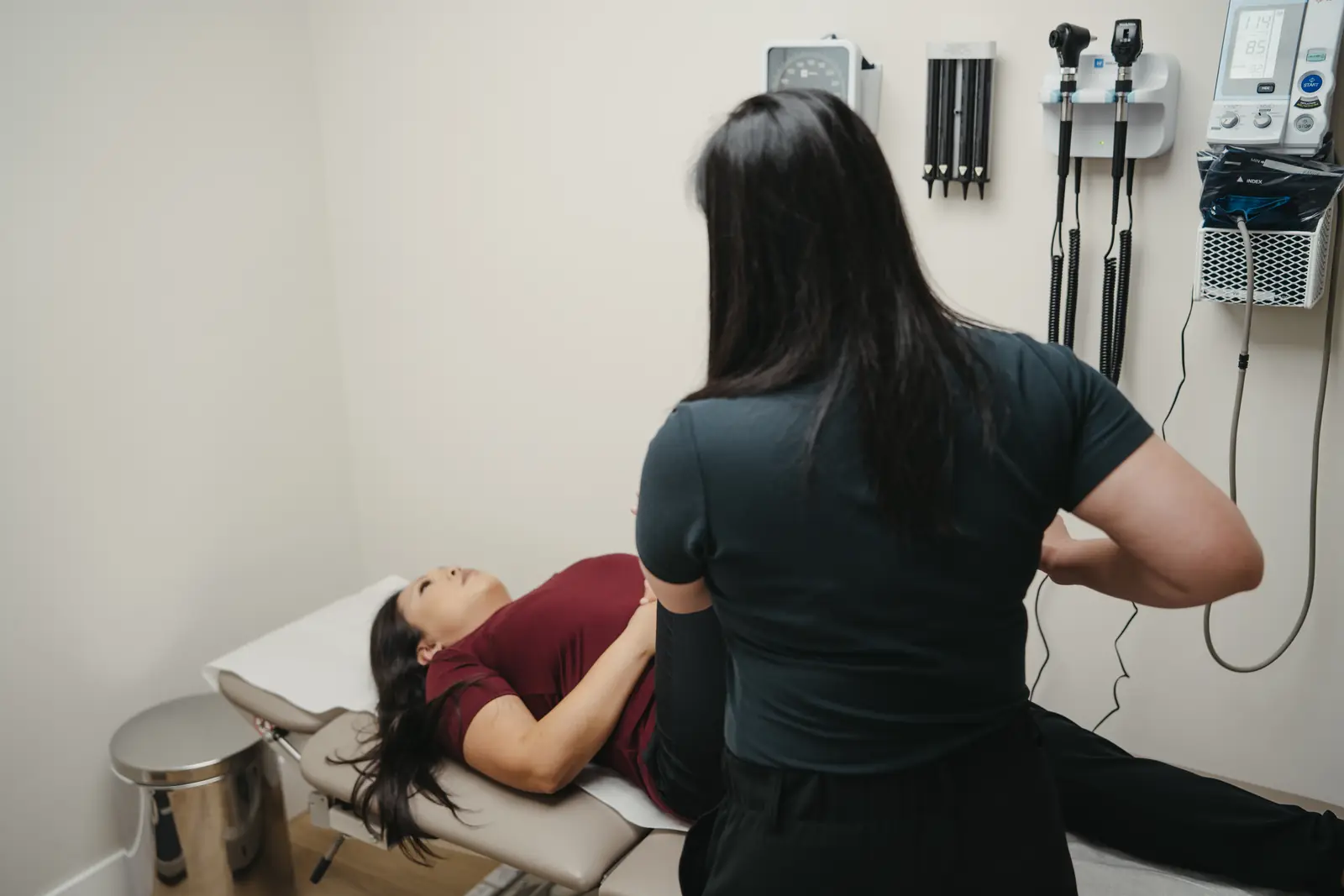
Your physiotherapist tests your inner ear, eye movements, balance, neck and tolerance for exercise. Treatment then targets the systems that are involved.
Book an AssessmentRepositioning maneuvers
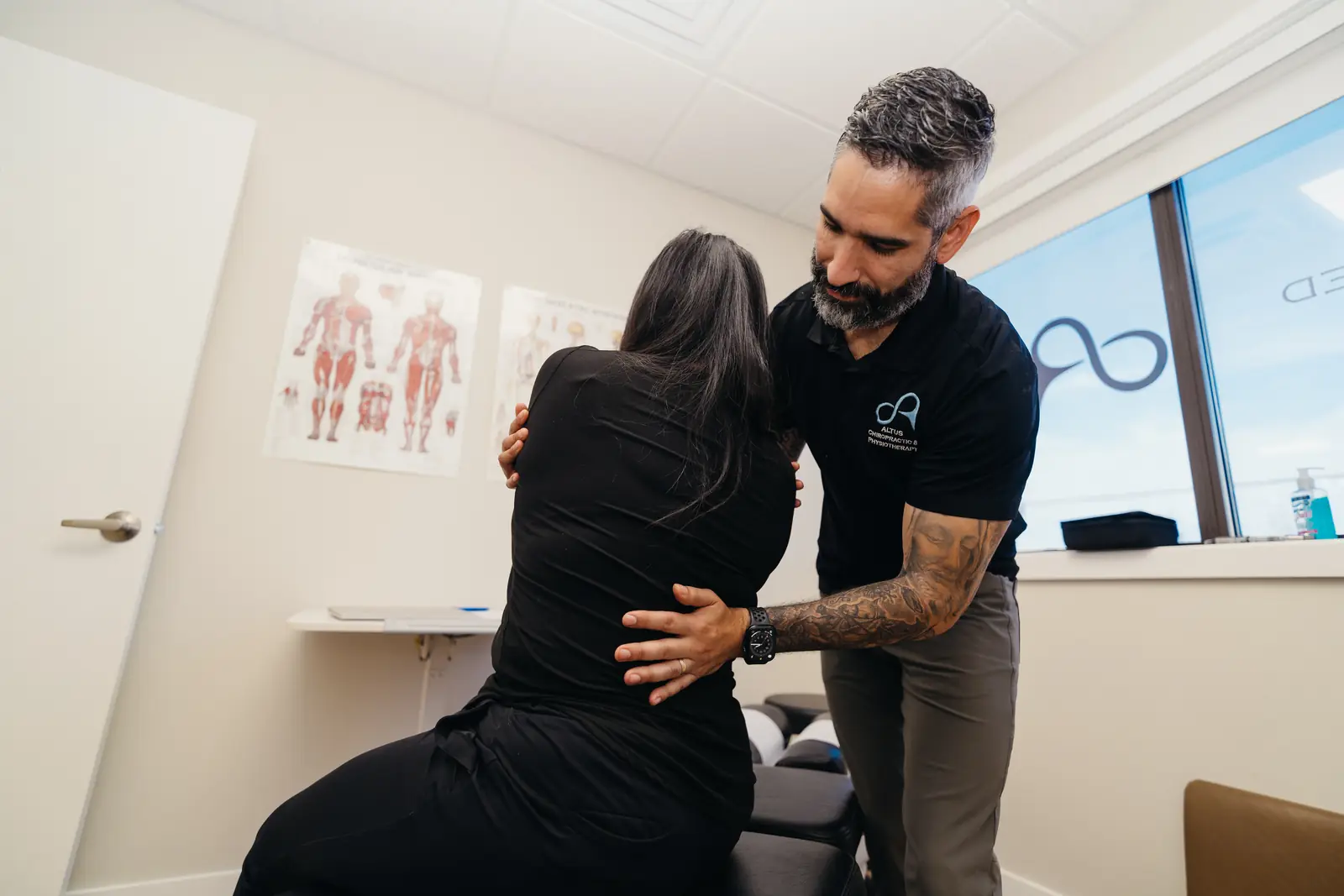
For BPPV, guided head movements such as the Epley maneuver move the loose crystals out of the inner ear canal.
Gaze and balance exercises
Exercises that retrain how your eyes, inner ear and body work together, progressed as they get easier.
Neck treatment
Hands-on treatment and exercise when your neck is adding to headaches or dizziness.
Graded return to activity
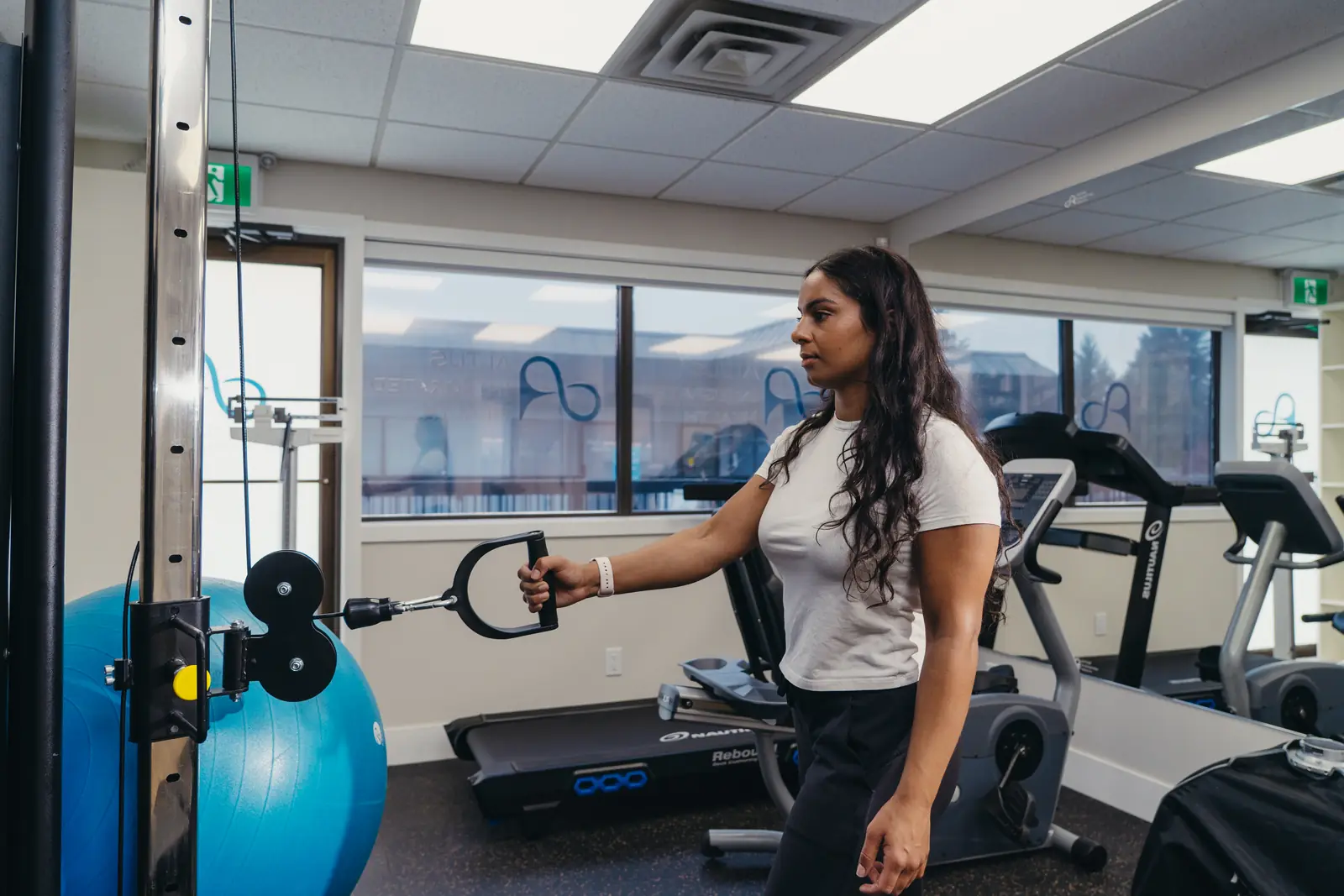
Light exercise below your symptom threshold, then a staged return to school, work and sport.
Your first visit
What happens when you book
-
01
Book online or call
No referral needed. Mention concussion, dizziness or vertigo so we book you with the right physiotherapist.
-
02
Assessment
Your first physiotherapy visit takes about 40 to 45 minutes. Some tests briefly bring on dizziness; that's how they find the cause.
-
03
Plan and treatment
A plan you agree on, treatment in the clinic, and exercises to do at home between visits.
If dizziness makes driving unsafe, arrange a ride to and from your appointment.

Our team
Concussion and vestibular physiotherapy
Manvir Samra · Physiotherapist
MPT (UBC); BSc (UFV); Orthopaedic Division Level 1
Manvir provides concussion and vestibular physiotherapy at Altus. When your neck or another injury needs care too, Manvir works with our other physiotherapists, chiropractors and massage therapists.
Meet the whole teamPatient Reviews
What our patients are saying
"I love the new clinic here at McCallum! Nikki is such a great help to me, I recommend her big time!"
"I have been struggling with back and neck pain for years. I have seen many different chiropractors and doctors but none of them were able to resolve my problem. ALTUS has helped me tremendously."
"They took the time to learn more about me and my lifestyle."
FAQs
Concussion and vertigo questions
Can physiotherapy help with vertigo?
Physiotherapy is a standard part of care for many types of vertigo and dizziness. For BPPV, the most common cause of vertigo when you move your head, a physiotherapist finds the affected inner ear canal with positional tests and uses repositioning maneuvers. For other vestibular problems, targeted exercises retrain balance and steady vision. Assessment comes first, because some causes of dizziness need a doctor instead.
Can physiotherapy help after a concussion?
When concussion symptoms linger, they usually have several sources: the inner ear, eye movements, the neck and tolerance for exercise. Our physiotherapist tests each of these and builds a graded plan for the ones involved, alongside your doctor's care.
What is BPPV?
Benign paroxysmal positional vertigo (BPPV) is brief spinning, usually under a minute, triggered by changes in head position such as rolling over in bed or looking up. It happens when small calcium crystals in the inner ear move into one of the canals that sense rotation.
Should I rest in a dark room after a concussion?
Not for long. Current international guidance advises a short period of relative rest, about 24 to 48 hours, then a gradual return to light activity that doesn't make your symptoms much worse. Long periods of complete rest are no longer recommended.
Do I need a referral?
No. Physiotherapy in BC is direct access, so you can book without a referral. After a head injury, it's still important to see a doctor, especially in the first few days. Some extended health plans have their own referral rules for reimbursement.
Is concussion or vestibular physiotherapy covered?
It's physiotherapy, so extended health plans that cover physiotherapy usually apply, up to your plan's limits. We direct bill most major insurance providers for eligible plans. If your concussion or dizziness followed a car crash, we bill ICBC directly for physiotherapy.
Technical detail
Concussion and Vestibular Physiotherapy: Assessment and Rehabilitation
Concussion and vestibular physiotherapy assess and treat problems with balance, dizziness, vertigo and recovery after a head injury. The vestibular system, in the inner ear, senses head movement and position and works with the eyes, the neck and the brain to keep vision steady and the body balanced. When part of that system is disturbed, by a concussion, by small crystals moving inside the inner ear, or by inflammation of the vestibular nerve, the result can be dizziness, vertigo, unsteadiness and trouble focusing. Physiotherapists assess which systems are involved and use repositioning maneuvers, targeted exercises and graded return-to-activity plans for the parts that respond to them. Some signs after a head injury, or with sudden dizziness, need emergency care first. At Altus Integrated Health, concussion and vestibular physiotherapy are provided by physiotherapist Manvir Samra.
How the Balance System Works
Balance depends on three sources of information that the brain combines continuously.
- The vestibular system. Each inner ear holds three semicircular canals, filled with fluid, that sense rotation of the head, and two otolith organs that sense straight-line movement and gravity. The vestibular nerve carries their signals to the brain.
- Vision. The eyes report the body's position relative to the surroundings. The vestibulo-ocular reflex keeps vision steady when the head moves, so the world doesn't blur while walking.
- Sensation from the body. Receptors in the feet, joints and neck muscles report position and pressure.
The brain compares the three. When they agree, balance feels automatic. When one source sends a faulty or mismatched signal, the brain receives conflicting information, and the result is dizziness, vertigo or unsteadiness. The neck plays a particular role: its muscles and joints report head position, so neck injury can contribute to dizziness, a pattern called cervicogenic dizziness.
Vertigo and dizziness are not the same. Vertigo is a false sense of spinning or movement, of the person or the room. Dizziness is a broader term that covers light-headedness, unsteadiness and a feeling of being off balance.
Common Vestibular Conditions
Several conditions account for most vestibular problems that physiotherapists see.
Benign paroxysmal positional vertigo (BPPV). BPPV causes brief episodes of spinning, usually under a minute, triggered by changes in head position: rolling over in bed, lying down, looking up or bending forward. It happens when small calcium carbonate crystals (otoconia) come loose from the otolith organs and move into one of the semicircular canals, where they disturb the fluid. The posterior canal is involved most often. BPPV can follow a head injury, but often has no clear cause.
Vestibular neuritis and labyrinthitis. Inflammation of the vestibular nerve, often after a viral illness, causes sudden, severe vertigo lasting hours to days. Labyrinthitis also affects hearing. After the acute stage, many people are left with unsteadiness and motion sensitivity.
Vestibular hypofunction. When one inner ear works less well than the other, after neuritis or another cause, the brain needs to adapt. Until it does, quick head movements can blur vision and cause unsteadiness.
Persistent postural-perceptual dizziness (PPPD). PPPD is a chronic, fluctuating sense of unsteadiness that often follows another vestibular problem. It worsens in busy visual environments, such as shops, and when standing.
Other causes of dizziness lie outside the inner ear: blood pressure changes, heart rhythm problems, medication effects, migraine and neurological conditions. Assessment separates these, and some need medical rather than physiotherapy care.
Concussion and Its Effects
A concussion is a brain injury caused by a force transmitted to the head, from a direct blow or from a sudden acceleration such as a whiplash-type movement in a car crash or a hard body check in sport. It disturbs how the brain functions rather than its structure, so CT and MRI scans are usually normal. Diagnosis rests on the history and the clinical examination.
Common symptoms include:
- Headache or pressure in the head
- Dizziness and balance problems
- Sensitivity to light or noise
- Difficulty concentrating or remembering
- Feeling foggy, slowed down or tired
- Sleep changes, irritability and low mood
Most people recover within a few weeks. When symptoms persist, they usually come from several drivers at once: the vestibular system, the eye-movement systems, the neck, reduced tolerance for exercise, and sleep and mood. Each driver calls for a different part of rehabilitation, which is why assessment comes first.
Current international guidance, from the Concussion in Sport Group's 2022 consensus, advises a short period of relative rest, about 24 to 48 hours, followed by a gradual return to light activity that doesn't make symptoms much worse. Prolonged rest in a dark room is no longer recommended. Return to school or work comes in stages, and return to full-contact sport comes last, after a stepwise progression and medical clearance.
Physiotherapy Assessment for Dizziness and Concussion
Assessment starts with the history and then tests each system in turn.
- History. The physiotherapist records the injury or onset, the type of dizziness, what triggers it, how long episodes last, other symptoms, and the effect on work, school, sport and sleep.
- Positional testing. The Dix-Hallpike test and the supine roll test move the head into positions that provoke BPPV. The pattern of eye movement (nystagmus) shows which canal is involved.
- Eye movement testing. Screening tests, such as the vestibular/ocular motor screen, check smooth pursuit, quick eye movements, convergence and the vestibulo-ocular reflex, and record whether each provokes symptoms. The head impulse test checks inner ear function.
- Balance testing. Standing tests with feet together, in tandem and on one leg, with eyes open and closed, show how the person uses each balance source.
- Neck examination. Range of motion, joint movement and muscle tests check whether the neck contributes to headaches or dizziness.
- Exertion testing. After a concussion, graded bike or treadmill testing finds the level of exercise a person tolerates without a significant rise in symptoms.
The physiotherapist also screens for signs that need medical assessment and works alongside the patient's doctor.
Treatment and Return to Activity
Treatment targets the systems the assessment identified.
- Repositioning maneuvers. For BPPV, the physiotherapist guides the head through a sequence of positions that moves the loose crystals out of the canal. The Epley maneuver treats the posterior canal; roll maneuvers treat the horizontal canal. Brief dizziness during the maneuver is expected.
- Gaze stabilization exercises. Moving the head while keeping the eyes fixed on a target retrains the vestibulo-ocular reflex.
- Habituation exercises. Repeated, controlled exposure to movements or visual environments that provoke mild symptoms helps the brain reduce its response over time.
- Balance training. Progressive standing and walking exercises, on firm and soft surfaces, with and without vision, rebuild steadiness.
- Neck treatment. Hands-on treatment and exercise address neck contributions to headache and dizziness.
- Graded aerobic exercise. After a concussion, exercise at a level below the symptom threshold, progressed gradually, forms a core part of recovery.
Return to activity follows a staged plan: daily activities, then school or work with adjustments, then light exercise, then sport-specific training, then full participation. Each stage continues only while symptoms stay manageable, and a setback means stepping back a stage rather than starting again.
Key facts
Vertigo Is A Spinning Sensation, And Dizziness Covers A Wider Range Of Symptoms
Vertigo describes a false sense that the person or the room is spinning or moving. Dizziness is a broader term that covers light-headedness, unsteadiness and feeling off balance. The distinction guides assessment, since spinning triggered by head position points toward BPPV.
BPPV Happens When Tiny Crystals In The Inner Ear Move Into The Wrong Canal
Small calcium carbonate crystals normally sit in the inner ear's otolith organs. In BPPV, some come loose and drift into a semicircular canal, where they disturb the fluid and trigger brief spinning with changes in head position. Repositioning maneuvers move them back out.
Complete Rest Is No Longer Advised For Weeks After A Concussion
International guidance now advises about 24 to 48 hours of relative rest after a concussion, then a gradual return to light activity that doesn't make symptoms much worse. Long periods of complete rest are no longer recommended.
Physiotherapists Assess The Inner Ear, Eyes, Neck And Exertion After A Concussion
Persisting concussion symptoms usually have several drivers. Physiotherapists test the vestibular system, eye movements, the neck and exercise tolerance, then build a plan for the systems involved.
Some Signs After A Head Injury Need Emergency Care First
A worsening headache, repeated vomiting, a seizure, increasing confusion or drowsiness, loss of consciousness, weakness or numbness, slurred speech or double vision after a head injury need emergency care. Sudden dizziness with face drooping, arm weakness or speech difficulty can signal a stroke and needs a 911 call.
Common Misconceptions About Concussion and Vertigo
Misconception: You Have To Hit Your Head To Get A Concussion
A concussion can follow any force transmitted to the head. A whiplash-type movement in a car crash, or a hard hit to the body in sport, can cause one without a direct blow to the head.
Misconception: The Best Treatment For A Concussion Is Complete Rest Until All Symptoms Are Gone
Guidance has moved away from prolonged rest. After a short period of relative rest, gradual light activity is encouraged, as long as symptoms don't rise much. Long periods in a dark room can slow recovery rather than help it.
Misconception: All Dizziness Comes From The Inner Ear
Dizziness has many sources: the inner ear, the eyes, the neck, the brain, blood pressure, the heart and medication among them. Assessment separates the causes, and some need medical rather than physiotherapy care.
Misconception: Vertigo Is Something You Just Have To Live With
Many causes of vertigo have specific treatments. BPPV is commonly treated with repositioning maneuvers, and vestibular rehabilitation addresses other causes. The first step is finding out which kind of vertigo it is.
Misconception: A Normal Brain Scan Means There's No Concussion
CT and MRI scans look for bleeding, fractures and other structural injury. A concussion affects how the brain functions, so scans are usually normal. The diagnosis comes from the history and the examination.
Ongoing Debates in Concussion and Vestibular Care
How early to exercise after a concussion. Guidance supports early, symptom-limited aerobic exercise, but clinicians still debate how soon to start and how much symptom increase is acceptable during exercise.
Home maneuvers for BPPV. Some clinicians teach patients to perform repositioning maneuvers at home. Others prefer clinician-performed maneuvers after the affected canal is confirmed, since treating the wrong canal can be ineffective or provoke symptoms.
Baseline testing in youth sport. Some programs test athletes before the season to compare after an injury. Others question whether baseline tests add enough to justify the time and cost.
The neck's role in persisting symptoms. Some clinicians see neck dysfunction as a major driver of persisting headaches and dizziness after concussion. Others view it as one factor among several, and the evidence continues to develop.
Who needs physiotherapy after a concussion. Some favour early, targeted physiotherapy for everyone after a concussion. Others reserve it for people whose symptoms persist beyond the first weeks, since many recover with guidance alone.
Components of Vestibular and Concussion Rehabilitation
Vestibular and concussion rehabilitation assembles from parts that depend on one another. The semicircular canals and otolith organs form the components of the inner ear's vestibular system, which is why assessment tests each separately. Positional testing forms a component of the vestibular assessment, identifying BPPV and the canal involved. Gaze stabilization exercises form a component of vestibular rehabilitation, alongside habituation and balance training. Graded aerobic exercise forms a component of concussion rehabilitation, building tolerance below the symptom threshold. Return-to-learn and return-to-work stages form components of the return-to-activity plan, preceding a full return to sport. Red-flag screening forms a component of every assessment, deciding when medical care comes first.
Summary
Concussion and vestibular physiotherapy assess and treat dizziness, vertigo, balance problems and persisting symptoms after a head injury. The balance system combines signals from the inner ear, the eyes and the body, and problems in any of them can cause dizziness. Physiotherapists identify which systems are involved through positional, eye-movement, balance, neck and exertion testing, then use repositioning maneuvers, targeted exercises and a staged return to activity. Current guidance favours a short period of relative rest after a concussion followed by gradual activity. Red-flag signs need emergency care first. At Altus Integrated Health, physiotherapist Manvir Samra provides concussion and vestibular physiotherapy.
More care at Altus
Care that works alongside it
Start the Conversation
Book a concussion or vertigo assessment
Directions
Two Abbotsford clinics
McCallum Road Clinic
Altus Integrated Health
2168 McCallum Rd #8Abbotsford, BC V2S 6R6
- Mon to Fri9:00 am to 6:00 pm
- Sat and SunClosed
Ventura Avenue Clinic
Altus Chiropractic and Physiotherapy
32920 Ventura Ave #101Abbotsford, BC V2S 6J3
- Mon to Fri9:00 am to 6:30 pm
- Sat9:00 am to 1:00 pm
- SunClosed