
Kinesiology · Abbotsford, BC
Kinesiology and Active Rehab in Abbotsford
Altus Integrated Health provides kinesiology in Abbotsford: an assessment of how you move, then a progressive exercise program that rebuilds strength, mobility and confidence for work, sport and daily life.
- No referral needed. Book online or by phone.
- BCAK member with a Bachelor of Science in Kinesiology (UFV).
- Works with your physio and chiro on one shared plan.
- Fascial Stretch Therapy certified, alongside exercise.
Kinesiology at Altus
The step between feeling better and being ready
Treatment settles the pain, but strength and confidence often lag behind. Go back to full activity too soon and the same area flares again. Stop exercising once you feel fine and the weakness that started the problem is still there.
Our kinesiologist bridges that gap. Calvin Lim assesses how you move, finds the weak links, and builds a program that gets harder only as fast as your body is ready for, until you're back to what you need to do.
He works alongside our physiotherapists and chiropractors, so your exercise program lines up with the rest of your care instead of competing with it.
Who it helps
When active rehab makes sense
Active rehab suits anyone rebuilding after an injury, surgery or time away from activity, not just athletes.
After physio or chiropractic care
When pain has settled but strength, range or confidence hasn't caught up yet.
After surgery
Strength and conditioning that follows your surgeon's guidelines, once you're cleared for exercise.
Back to work
Conditioning built around the demands of your job, from lifting to long shifts on your feet.
Back to sport
A staged return from basic strength to speed, agility and impact.
Stiffness and limited range
Mobility work and assisted stretching when tight muscles and fascia hold you back.
After a car accident
Active rehab as part of your recovery after a crash, with ICBC claims billed on your behalf.
ICBC treatmentOur approach
Assess, then build, one step at a time
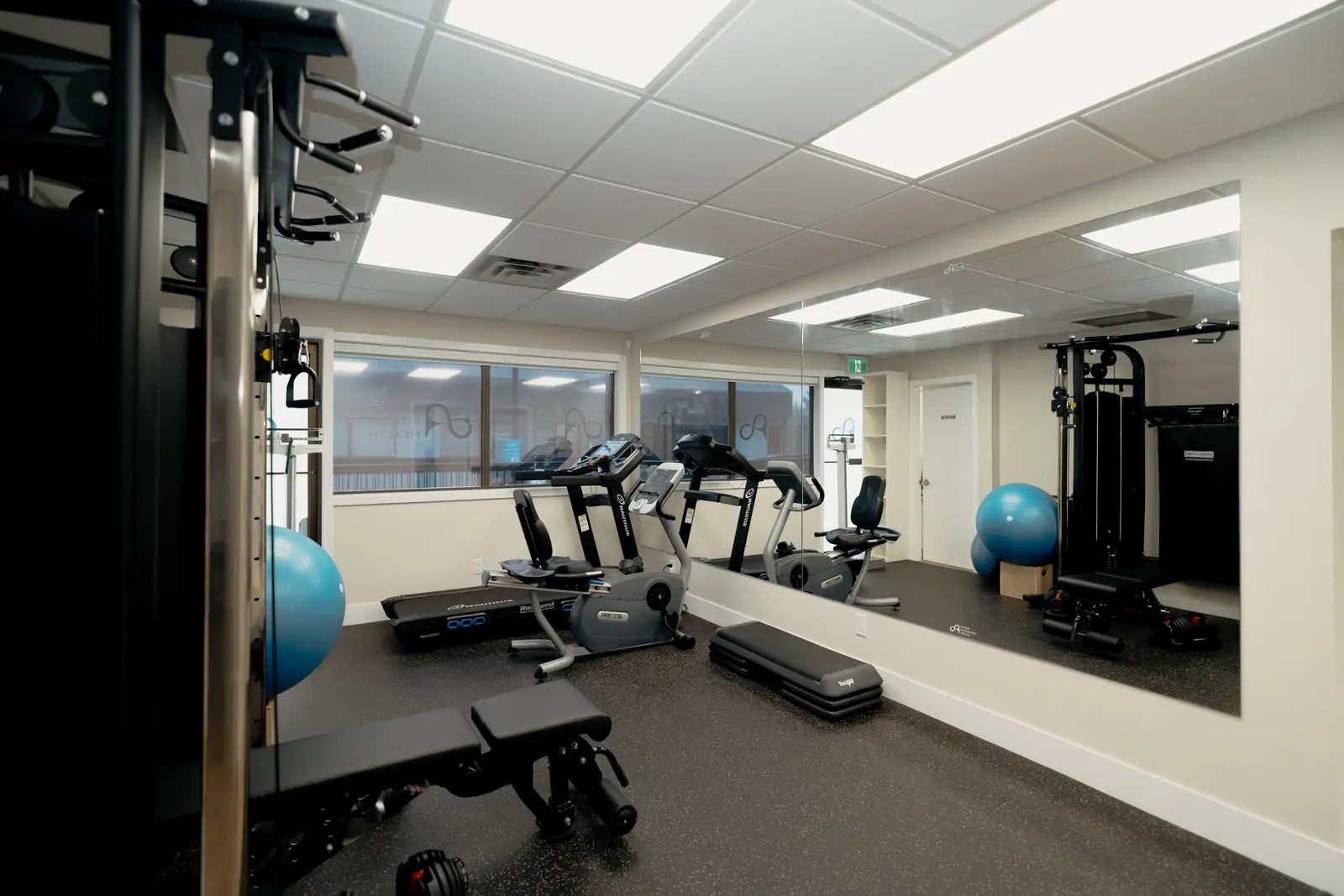
Every program starts from a measured baseline and progresses one variable at a time, so you see progress instead of guessing at it.
Book KinesiologyFunctional assessment
Movement screening, strength, flexibility and balance tests that set your baseline and your goals.
Progressive exercise
Strength, mobility and conditioning work that steps up only when the current level feels controlled.
Fascial Stretch Therapy
Assisted, table-based stretching that works through your range when tight tissue limits your exercises.
A program you keep
A home routine you understand and can continue on your own once your goals are met.
Getting started
What happens when you book
-
01
Book online or call
No referral needed. If you're already seeing one of our practitioners, they can bring the kinesiologist into your plan.
-
02
Functional assessment
We measure how you move today and agree on concrete goals for where you want to get to.
-
03
Your program
Supervised sessions in the clinic, plus a home program, re-tested as you progress.
"If you don't use it, you really do lose it."
Our team
Our kinesiologist
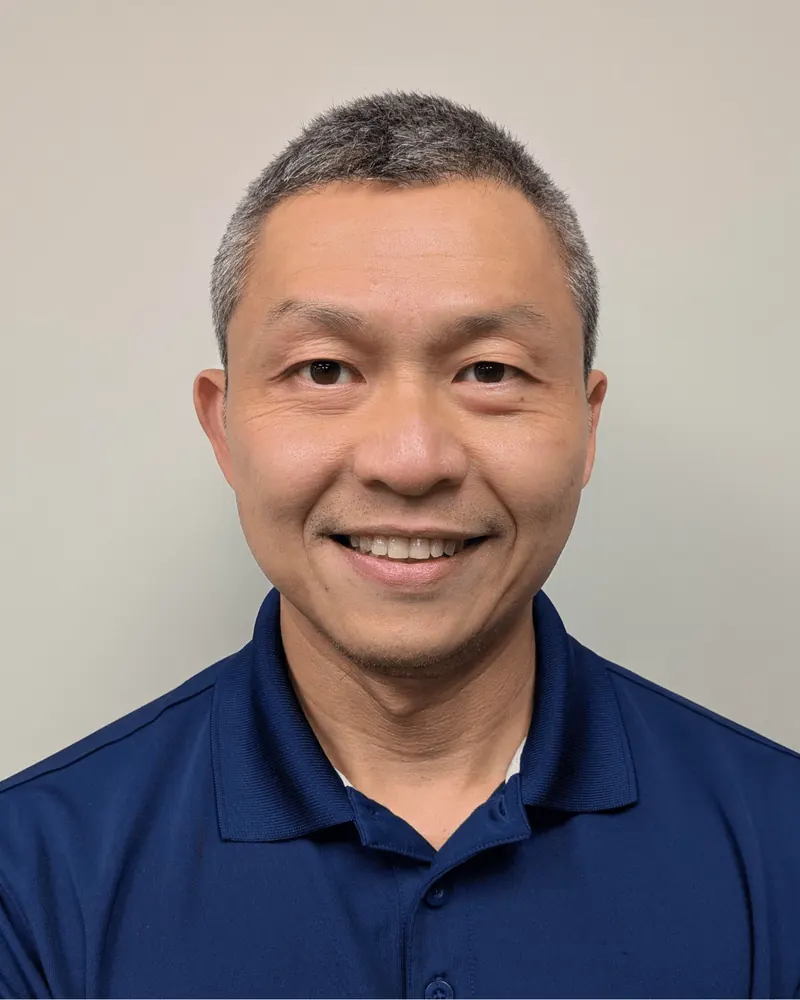
Calvin Lim · Kinesiologist
BSc Kinesiology (UFV); BC Association of Kinesiologists member; Fascial Stretch Therapist
Calvin Lim brings a kinesiology degree and training in Functional Movement Screening, NeuroKinetic Therapy, Anatomy in Motion and Active Isolated Stretching.
Meet the whole teamPatient Reviews
What our patients are saying
"I have been struggling with back and neck pain for years. I have seen many different chiropractors and doctors but none of them were able to resolve my problem. ALTUS has helped me tremendously."
"They took the time to learn more about me and my lifestyle."
"If you have back or neck pain, do not ignore it please. Do visit them, you won't regret it."
FAQs
Kinesiology questions
What does a kinesiologist do?
A kinesiologist uses exercise and movement to help you recover function after an injury, surgery or illness. They assess how you move, then build and progress an exercise program aimed at strength, mobility and the activities you need to get back to.
How is a kinesiologist different from a physiotherapist?
A physiotherapist diagnoses and treats injuries using hands-on techniques, exercise and modalities. A kinesiologist focuses on exercise-based rehab and conditioning. At Altus the two often work in sequence, with the kinesiologist building strength once treatment has the problem settling.
What is active rehab?
Active rehab is supervised, progressive exercise that rebuilds strength, mobility and confidence after an injury. It starts from an assessment of what you can do now and moves gradually toward the demands of your work, sport or daily life.
Does ICBC cover kinesiology?
ICBC funds active rehab with a kinesiologist after a crash under its Enhanced Care model, within the limits of your claim. We bill ICBC on your behalf for accepted claims, and our front desk can help you check what applies.
Do I need a referral to see a kinesiologist?
No. You can book a kinesiologist directly. Some insurance plans and claims have their own requirements before they pay, so check your coverage first.
Technical detail
How Active Rehab Works: The Kinesiologist's Role in Recovery
Kinesiology is the study of human movement, and a clinical kinesiologist applies it to recovery. A kinesiologist assesses how a person moves after an injury, surgery or period of inactivity, then designs and progresses an exercise program that rebuilds strength, mobility, conditioning and confidence. This work, called active rehabilitation or active rehab, bridges the gap between treatment that settles a problem and a full return to work, sport and daily life. Kinesiologists hold a degree in kinesiology, and in British Columbia those who meet professional standards hold membership in the BC Association of Kinesiologists (BCAK). In a multidisciplinary clinic, the kinesiologist works alongside physiotherapists and chiropractors.
The Functional Assessment
The functional assessment establishes a starting point for every active rehab program. It measures what a person can do now, compares it with what they need to do, and sets goals between the two.
A kinesiologist's assessment typically covers:
- Movement screening. Standardized screens such as the Functional Movement Screen (FMS) observe basic patterns like squatting, stepping and reaching, and reveal compensations.
- Strength testing. Simple tests of grip, limb and trunk strength identify weak links and side-to-side differences.
- Flexibility testing. Range-of-motion checks show where tight muscles or fascia limit movement.
- Balance testing. Single-leg stance and similar tests measure stability and control.
- Goal setting. The kinesiologist and client agree on concrete targets: lifting a grandchild, returning to a shift, finishing a run.
The assessment produces baseline measures that later re-tests compare against, so progress becomes visible rather than assumed. It also identifies a pain-free range to work within at the start, which keeps the first weeks of a program productive rather than provocative.
Re-testing repeats the same measures at set intervals, typically every few weeks. Changes in strength, range and balance confirm that the program works or show where it needs adjusting. The same numbers give the client and any referring practitioner a shared, objective picture of progress.
Exercise Prescription and Progression
Exercise prescription turns assessment findings into a structured program. Each exercise carries a dosage: sets, repetitions, load and frequency. Progressive loading raises that dosage as tissues adapt, which is the mechanism by which muscles and tendons regain capacity.
Programs draw on several types of work:
- Strength training with bodyweight, bands, dumbbells or machines rebuilds force capacity.
- Mobility work restores range at stiff joints and tight tissues.
- Conditioning such as walking, cycling or circuits rebuilds endurance and tolerance for long days.
- Motor control drills retrain coordination, posture and efficient movement patterns.
- Graded return-to-task progressions rehearse the specific demands of work or sport, such as lifting from the floor.
Progression follows a simple rule: change one variable at a time and only when the current level feels manageable. Moving too fast commonly causes flare-ups and setbacks; moving too slowly prolongs recovery. Supervision in the clinic allows real-time correction, while a home program carries the work between sessions.
A return-to-lifting progression illustrates how prescription works in practice:
- Pattern. The client practises a hip hinge with a light dowel to learn the movement without load.
- Light load. A kettlebell or dumbbell adds resistance once the pattern holds steady.
- Range. The lift starts from a raised surface and lowers toward the floor over successive weeks.
- Volume. Repetitions and sets increase before load does.
- Task practice. The final stage rehearses the real task, such as lifting a box from the floor and carrying it.
Each step advances only when the previous one feels controlled and comfortable.
Supporting Techniques
Kinesiologists add assisted and corrective techniques to exercise where they help movement.
- Fascial Stretch Therapy (FST) is an assisted, table-based stretching method that moves joints through their range while targeting fascia, the connective tissue that wraps muscles.
- Active Isolated Stretching (AIS) uses short, repeated active stretches held for only a couple of seconds.
- NeuroKinetic Therapy (NKT) uses muscle testing to identify and address compensation patterns between muscles.
- Anatomy in Motion (AiM) analyses how the body moves through the gait cycle.
- Anatomy Trains describes lines of fascia that connect regions of the body, guiding how stretching and exercise address distant areas.
These techniques support rather than replace exercise. Assisted stretching suits clients whose range of motion limits the exercises they need; movement-analysis methods such as NKT and AiM suit clients whose pain or weakness follows a compensation pattern rather than a single injured spot. A session that uses one of these techniques usually ends with active exercise that uses the new range. At Altus Integrated Health, kinesiologist Calvin Lim holds certification in Fascial Stretch Therapy and training in Functional Movement Screening, NeuroKinetic Therapy, Anatomy in Motion, Active Isolated Stretching and Anatomy Trains.
Active Rehab Programs and Settings
Active rehab programs share a structure but differ by goal. Each starts from the functional assessment and moves through milestones toward independence.
- Post-injury rehabilitation rebuilds strength and confidence after sprains, strains and other musculoskeletal injuries.
- Post-surgery strengthening follows surgical guidelines after procedures such as knee or hip replacement.
- Return-to-work conditioning rebuilds the specific capacities a job demands, from lifting to prolonged standing.
- Return-to-sport progressions move from basic strength to sport-specific speed, agility and impact.
- Long-term activity programs hand over a sustainable routine the person continues alone.
The starting point shapes each program. An older adult rebuilding balance after a fall begins with supported standing exercises; a labourer returning to heavy work begins with lifting mechanics and progresses to job-specific loads; an athlete returning after a sprain moves through strength, then speed, then change of direction. Programs also adjust around other care: when a physiotherapist or chiropractor treats the same client, the kinesiologist schedules the hardest sessions away from treatment days and aligns exercises with the treatment plan.
The final milestone in every program is independence: the client leaves with a routine they understand and continue without supervision.
Professional Standards and Access
Kinesiology in BC operates through professional association standards. Kinesiologists complete a degree in kinesiology or a related exercise science, and those who meet the BC Association of Kinesiologists' requirements hold BCAK membership, which carries standards of practice and continuing education.
Access and payment follow several routes:
- ICBC funds active rehabilitation with a kinesiologist after a motor vehicle crash under its Enhanced Care model, within the limits of each claim.
- WorkSafeBC funds exercise-based programs for some accepted workplace injury claims. At Altus, WorkSafeBC claims are billed for chiropractic and physiotherapy only.
- Extended health plans cover kinesiology under some policies.
- Direct booking requires no referral, though some plans and claims carry their own requirements.
Coverage and limits vary by plan and claim, so confirming them before starting avoids surprises.
Key facts
Kinesiologists Use Exercise To Restore Function After Injury
Exercise forms the kinesiologist's main tool. Where other practitioners use hands-on techniques or modalities, a kinesiologist uses structured movement to rebuild capacity. The focus stays on function: the ability to climb stairs, lift, work a full shift or return to a sport, measured against goals set in the first assessment.
Active Rehab Bridges The Gap Between Treatment And Full Activity
Treatment settles a problem; active rehab rebuilds the capacity to handle full activity again. A common pattern sees pain improve with physiotherapy or chiropractic care while strength and confidence lag behind. Without a bridge, people return to full activity underprepared and re-injure the same area. Active rehab fills that gap with a graded path from comfortable movement to full demand.
Progress Depends On Consistent, Gradually Increasing Exercise
Consistency drives results in active rehab. Tissues adapt to repeated, gradually increasing load, and they lose capacity when that load stops. A modest program done several times a week outperforms an ambitious one done occasionally. The principle that strength fades without use applies in both directions: capacity builds with regular work and declines without it.
Kinesiologists In BC Hold BCAK Membership When They Meet Its Standards
The BC Association of Kinesiologists sets education and practice standards for its members. Membership indicates that a kinesiologist has completed qualifying education and follows the association's standards and continuing education requirements. Continuing education keeps practice current as exercise science develops. Clients confirm a kinesiologist's membership through the association. Membership also gives clients a body to contact with questions about a member's practice, and it signals to insurers and claim programs that the kinesiologist meets a recognized standard.
Kinesiologists Work Alongside Physiotherapists And Chiropractors
Kinesiology fits within team-based care. In a multidisciplinary clinic, a physiotherapist or chiropractor assesses and treats an injury, then refers the client to a kinesiologist for the strengthening phase, or the two work in parallel. Shared goals and communication between practitioners keep the program aligned with the treatment plan. The client benefits from a single plan rather than separate, competing instructions, and each practitioner sees how the others' work affects progress.
Common Misconceptions About Kinesiology
Misconception: A Kinesiologist Is The Same As A Personal Trainer
A kinesiologist holds a degree in kinesiology and applies exercise to rehabilitation and function. Personal trainer certifications focus on general fitness. Some kinesiologists also hold personal training certifications, but rehabilitation work requires the broader education.
Misconception: Active Rehab Is Only For Athletes
Active rehab serves anyone rebuilding after an injury, surgery or time away from activity, including office workers, tradespeople, older adults and people recovering from a car crash. Programs scale to the starting point.
Misconception: Rest Alone Rebuilds Strength After An Injury
Rest settles irritated tissue but does not rebuild strength. Muscles and tendons regain capacity through gradual loading, which active rehab provides in a controlled way.
Misconception: Once Pain Is Gone, Exercise Is No Longer Needed
Pain easing and capacity returning are separate milestones. Stopping exercise at the first leaves the area weaker than before the injury and more likely to flare again under load.
Misconception: Kinesiology Is About Applied Tape
Kinesiology tape is a product that shares the word. Kinesiology is the study of human movement, and a kinesiologist's work centres on assessment and exercise-based rehabilitation.
Ongoing Debates in Kinesiology
Timing of active rehab. One view holds that active rehab should begin as early as possible after an injury, within pain-free limits, to prevent deconditioning. Another prefers to wait until pain settles further, citing the risk of flare-ups. Most programs now start early with conservative loading.
Movement screens. Proponents use standardized screens such as the FMS to identify compensations and guide programming. Critics question how well screen scores predict future injury and treat them as one input among several.
Assisted stretching. Supporters of methods such as Fascial Stretch Therapy value the range of motion assisted stretching achieves. Sceptics favour active mobility work alone, arguing that range earned actively transfers better to daily movement.
Supervision versus independence. Some practitioners treat supervised sessions as essential for quality and safety. Others prioritise independent home programs earlier, citing cost and long-term adherence.
Regulation. Some members of the profession argue kinesiology needs provincial regulation like other health professions. Others consider association membership standards sufficient for public protection.
Components of Active Rehabilitation
Active rehabilitation assembles from connected parts. The functional assessment forms a component of an active rehab program, providing the baseline every later decision relies on. Progressive loading forms a component of exercise prescription, setting how and when each exercise becomes harder. Anatomy shapes the plan: fascia forms a component of the musculoskeletal system, which explains why techniques such as Fascial Stretch Therapy address connective tissue alongside muscle. The home program forms a component of active rehabilitation, carrying progress between supervised sessions and into long-term independence. In workplace injuries, return-to-work conditioning forms a component of recovery, rehearsing job demands before the person resumes full duties. Together these parts move a person from guarded, limited movement back to full activity.
Summary
Active rehabilitation applies kinesiology, the study of human movement, to recovery. A kinesiologist assesses current ability, prescribes and progresses exercise, adds supporting techniques where useful, and works toward independence in work, sport and daily life. In British Columbia, kinesiologists who meet professional standards hold membership in the BC Association of Kinesiologists, and they work alongside physiotherapists and chiropractors in team-based care. Active rehab bridges the gap between treatment and full activity.
More care at Altus
Care that works alongside it
Directions
Two Abbotsford clinics
McCallum Road Clinic
Altus Integrated Health
2168 McCallum Rd #8Abbotsford, BC V2S 6R6
- Mon to Fri9:00 am to 6:00 pm
- Sat and SunClosed
Ventura Avenue Clinic
Altus Chiropractic and Physiotherapy
32920 Ventura Ave #101Abbotsford, BC V2S 6J3
- Mon to Fri9:00 am to 6:30 pm
- Sat9:00 am to 1:00 pm
- SunClosed