

Chiropractic · Abbotsford, BC
Chiropractor in Abbotsford
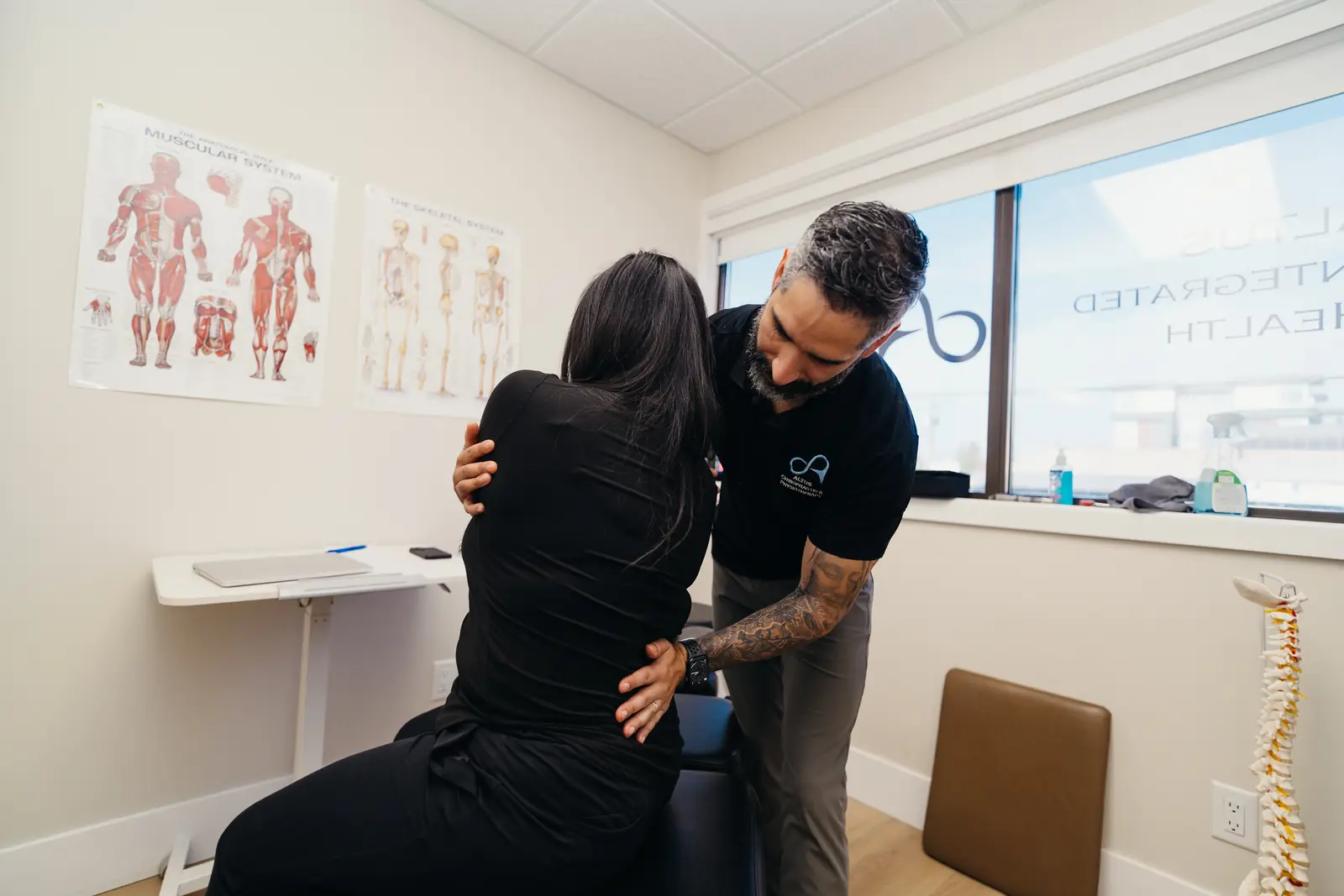
Altus Integrated Health provides chiropractic care at two Abbotsford clinics: an assessment first, then adjustments, soft-tissue work and exercise, with gentler options if you'd rather not be adjusted.
- No referral needed. Book online or by phone.
- Five chiropractors across McCallum Road and Ventura Avenue.
- Your choice of technique. Mobilization and soft-tissue options, no pop required.
- Direct billing for eligible extended health plans.
Chiropractic at Altus
Back and neck pain that keeps getting in the way
A back that tightens every time you lift. A neck so stiff you can't shoulder check. Pain that eases for a while, then comes back. Low back pain is one of the most common reasons people see a chiropractor, and the longer it's been going on, the longer it usually takes to settle.
Our chiropractors listen first. They take your history, test how your spine and joints move, and explain what they find before treating anything. If you're nervous about adjustments, say so: there are other ways to treat the same problem.
They work alongside our physiotherapists, massage therapists and kinesiologist. When your recovery needs more than chiropractic, they refer you within the clinic and share what they've found.
What we commonly see
What our chiropractors help with
Chiropractic care focuses on the spine, the joints and the muscles that move them. These are the reasons people book with us most often.
Low back pain
Back pain after lifting, sitting or a sudden movement, with or without symptoms that travel into the leg.
Neck and mid-back stiffness
Stiff necks, tightness between the shoulder blades, and stiffness that limits turning and reaching.
Sports and joint injuries
Strains and joint problems in the spine and the extremities, including shoulders, hips, knees and ankles.
Back pain during pregnancy
Back and pelvic discomfort during pregnancy, with positioning and techniques adapted to each stage.
Scoliosis-related back pain
Back pain linked to scoliosis, seen by a chiropractor with experience treating it.
Car accident and work injuries
Neck and back injuries after a crash or at work, with ICBC and WorkSafeBC claims billed on your behalf.
ICBC treatmentOur approach
Adjustments when they help, alternatives when you'd rather not
Your chiropractor chooses techniques from your assessment and your preferences, and checks in before treating. Nothing happens that you're not comfortable with.
Book ChiropracticAdjustments
Diversified spinal and extremity adjusting to restore movement in stiff joints. The pop is gas releasing in the joint fluid: nothing cracks or breaks.
Gentler options
Mobilization and Active Release Technique treat the same area without a thrust and without the popping sound.
Soft-tissue care
Instrument-assisted soft tissue mobilization (IASTM), Active Release Technique, taping, and cupping (offered by Dr. Otano, Dr. Gill and Dr. Sidhu) for the muscles around the joint.
Shockwave and exercise
In-house shockwave therapy for persistent tendon problems, and home exercises that keep each visit's progress going.
Your first visit
What happens when you book
-
01
Book online or call
No referral needed. Our front desk helps match you with a chiropractor who suits what you're looking for.
-
02
Assessment
Your first visit takes about 20 to 30 minutes: a questionnaire, then a physical exam where you move and we check your range of motion.
-
03
Treatment and plan
Treatment you're comfortable with, home exercises, and a realistic estimate of how many visits you'll need.
Feeling a little sore for a day or two after early visits is common, as your joints and muscles adjust.
"I let them talk and I listen. If they're not comfortable with something, I just don't do it."

Our team
Our chiropractors
Five chiropractors work across our McCallum Road and Ventura Avenue clinics.
-
Dr. Trang Luu-Grover, DC
Chiropractor, co-ownerDC, MExSc and BSc (University of Western States); BKin (UFV)
-
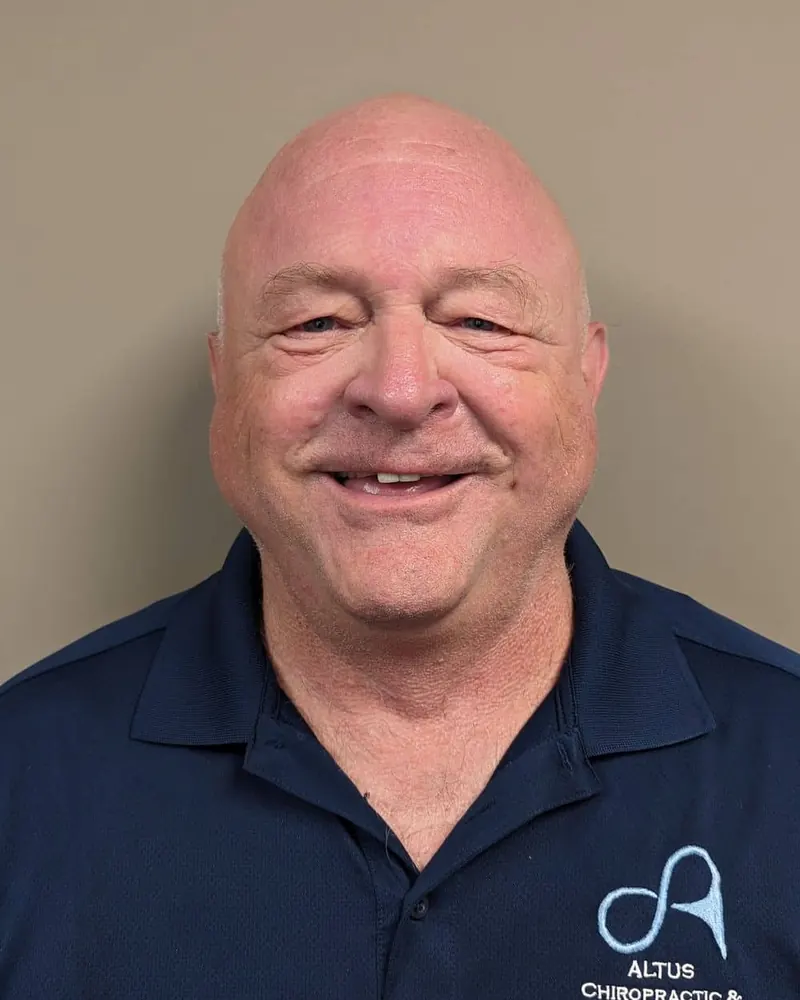 Dr. Rob Cormack, DC
ChiropractorDC, Canadian Memorial Chiropractic College (1980)
-
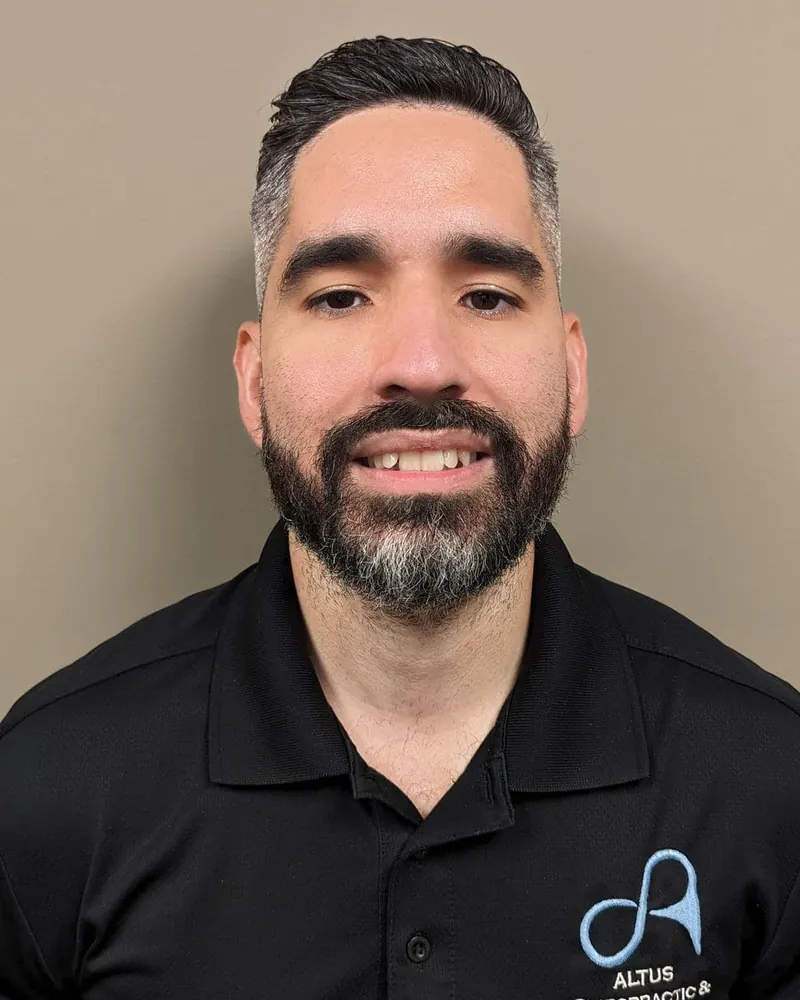 Dr. Jose Otano, DC
ChiropractorDC, Palmer College of Chiropractic West; BKin (UFV)
-
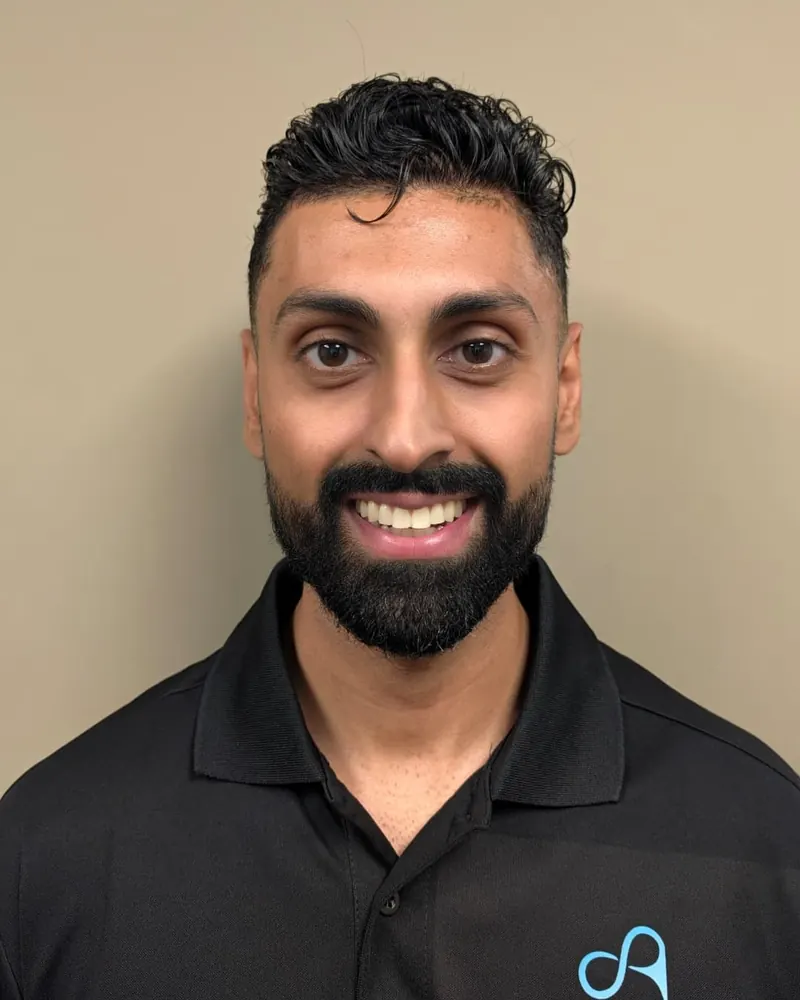 Dr. Upash Gill, DC
ChiropractorDC, Canadian Memorial Chiropractic College (2026); undergraduate studies at SFU
-
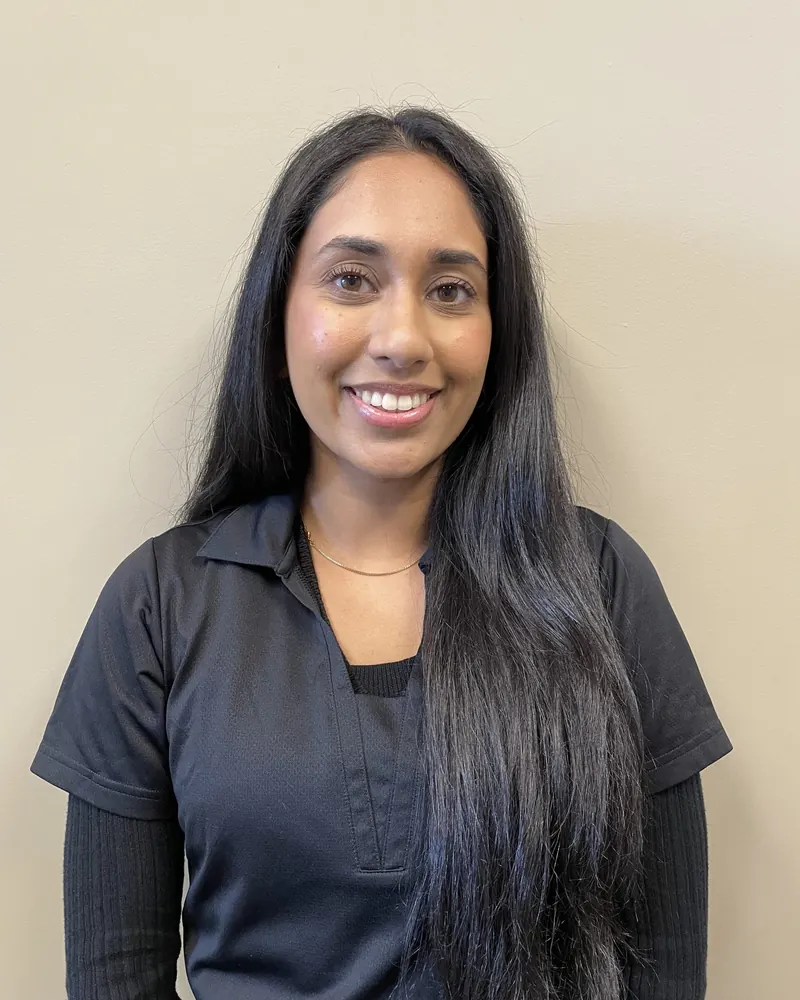 Dr. Manmeet Sidhu, DC
ChiropractorDC and BHS (University of Western States); BSc (UFV)
Patient Reviews
What our patients are saying
"I have been struggling with back and neck pain for years. I have seen many different chiropractors and doctors but none of them were able to resolve my problem. ALTUS has helped me tremendously."
"I was worried that chiropractic would be too much, but it was not rough at all. Highly recommend."
"So glad to have found a chiropractor that is so gentle and effective. She has worked her magic on multiple people in my family."
FAQs
Chiropractic questions
What does a chiropractor do?
A chiropractor assesses and treats problems with the spine, joints and the muscles around them. Treatment combines adjustments and mobilization with soft-tissue work and exercise. Chiropractors in BC hold a Doctor of Chiropractic degree and refer you on when findings fall outside their scope.
What is the popping sound during an adjustment?
It's gas being released from the fluid inside a joint as it moves. Nothing cracks or breaks. The sound seems louder in the neck because your neck is close to your ear, not because the adjustment is stronger.
Do I have to get my neck cracked?
No. Adjustments are one option among several. Mobilization and soft-tissue techniques such as Active Release Technique treat the neck without the popping sound. Your chiropractor talks through the options first and changes approach whenever you're uncomfortable.
Is it normal to feel sore after seeing a chiropractor?
Yes. Mild soreness for a day or two after a visit is common, especially after the first one, because your joints and muscles are moving in ways they aren't used to. If pain keeps increasing, or you notice new numbness or weakness, call the clinic.
How many chiropractic visits will I need?
It depends on how long you've had the problem, what's causing it, and your age and health. Recent problems usually improve faster than ones that have lasted months. After your assessment, your chiropractor gives you an estimate and reviews it as you progress.
Do I need a referral to see a chiropractor in BC?
No. Chiropractors in BC see patients directly, so you can book without a doctor's referral. Some extended health plans have their own rules for claims, so check your plan before your first visit.
Technical detail
How Chiropractic Care Works: Techniques, Choices and Course of Care
Chiropractic is a regulated health profession that assesses and treats problems with the spine, the joints and the muscles that move them. A chiropractor examines how a joint moves, identifies where movement is restricted or painful, and treats it with adjustments, mobilization, soft-tissue techniques and exercise. In British Columbia, chiropractors hold a Doctor of Chiropractic (DC) degree, register with the College of Complementary Health Professionals of BC (CCHPBC), and accept patients without a referral. The chiropractic adjustment forms the best-known part of care, but it sits within a wider course of care that includes assessment, soft-tissue therapy and home exercise.
The Chiropractic Assessment
The chiropractic assessment decides what treatment suits each patient, and it starts every course of care. At Altus Integrated Health, a first chiropractic visit runs about 20 to 30 minutes.
The assessment moves through a set sequence:
- Health questionnaire. The patient records the problem, its history, past injuries, medications and general health.
- History interview. The chiropractor asks when the problem started, what makes it worse or better, and what the patient wants to get back to.
- Physical examination. The chiropractor observes posture and movement, then examines the spine and any involved joints.
- Range-of-motion testing. The patient moves through bending, turning and side-bending so the chiropractor sees where movement stops or hurts.
- Orthopaedic and neurological tests. Specific tests such as the straight leg raise, plus checks of reflexes and sensation, show whether a nerve is involved.
The assessment ends with a provisional explanation and a plan. Findings that fall outside chiropractic scope, such as signs that need medical investigation, lead to a referral to a physician. Patients who come in for periodic check-ups receive a full-spine assessment rather than a single-complaint exam.
Adjustment Techniques
Chiropractic adjustment techniques share one principle: restoring movement to a joint that moves too little or moves painfully. The techniques differ in speed, force and method.
- Diversified adjusting applies a quick, controlled thrust to a specific spinal joint, usually producing an audible release.
- Extremity adjusting applies the same principle to the shoulder, elbow, wrist, hip, knee and ankle.
- Side-posture lumbar adjustment positions the patient on their side to adjust the low back.
- Joint mobilization moves the joint slowly and rhythmically through its range without a thrust and without the popping sound.
- Instrument-assisted adjusting uses a hand-held device to deliver a small, fast impulse in place of a manual thrust.
The audible release during a thrust adjustment comes from cavitation: gas forming and releasing in the fluid that lubricates the joint. The sound carries no information about bones, which do not crack or break during an adjustment. The sound seems louder in the neck because the neck sits close to the ear.
Technique choice depends on the assessment, the joint involved and patient comfort. A patient who feels nervous about neck adjustments receives mobilization or soft-tissue work instead, and the chiropractor changes approach whenever a patient prefers.
A typical treatment visit follows a predictable order. The chiropractor checks how the patient responded since the last visit, re-tests the movements that were restricted, then treats. Before any adjustment the chiropractor explains the technique, positions the patient on the table, and confirms the patient is comfortable to proceed. After treatment the chiropractor re-tests movement to see what changed and reviews the home exercises. Mild soreness for a day or two after early visits is common as joints and muscles adapt.
Soft-Tissue and Supporting Care
Soft-tissue care treats the muscles, tendons and fascia that surround and move the joints, and it complements adjustments in most chiropractic visits.
- Active Release Technique (ART) combines direct pressure on a tight or scarred tissue with a movement from the patient, treating the area without adjusting the joint.
- Instrument-assisted soft tissue mobilization (IASTM) uses smooth-edged tools to work across muscle and connective tissue.
- Kinesiology taping supports an area and gives the skin sensory feedback during movement.
- Shockwave therapy delivers acoustic pulses to persistent tendon and soft-tissue problems.
- Exercise rehabilitation gives the patient stretches and strengthening work to continue at home.
Altus Integrated Health performs shockwave therapy, laser and therapeutic ultrasound in-house, delivered by a chiropractor or physiotherapist. Supporting care extends the effect of each visit: an adjustment changes how a joint moves for a time, while soft-tissue work and home exercise change the tissues that control it.
Common Presentations in Chiropractic Care
Chiropractic care addresses a set of recurring musculoskeletal problems, with low back pain at the top of the list.
- Low back pain appears with or without symptoms travelling into the leg, and frequently follows lifting, prolonged sitting or a sudden movement.
- Neck pain and stiffness commonly follow poor sleep positions, desk work or a car crash.
- Headaches that start in the neck present as pain at the base of the skull spreading forward.
- Mid-back and rib pain presents as stiffness between the shoulder blades or sharp pain with breathing or twisting.
- Sports and work strains affect the spine and the extremities, including shoulders, hips and knees.
Some groups present with distinct needs. Back and pelvic pain during pregnancy calls for adapted positioning and techniques. Scoliosis-related back pain calls for a chiropractor with scoliosis experience; at Altus, Dr. Trang Luu-Grover, DC, sees patients with scoliosis. Older patients often need more time per visit and gentler techniques.
Duration shapes every presentation. Problems present for a few days respond differently from problems present for months.
Regulation, Referral and Coverage
Chiropractic in BC operates as a regulated, direct-access profession. Chiropractors complete a Doctor of Chiropractic program, such as those at the Canadian Memorial Chiropractic College, the University of Western States or Palmer College of Chiropractic West, and register with the College of Complementary Health Professionals of BC.
The college regulates how chiropractors use the title "doctor". Since April 2026, a chiropractor using the title makes clear that they are not a medical doctor, for example "Dr. Smith, DC" or "doctor of chiropractic". The college also bars advertising that compares practitioners or promises results.
A patient books a chiropractor directly. Payment routes include:
- Extended health benefits, which cover chiropractic under many plans up to set limits.
- Direct billing, which sends eligible claims straight to the insurer.
- ICBC, which funds chiropractic treatment after a motor vehicle crash under its Enhanced Care model.
- WorkSafeBC, which funds chiropractic care for accepted workplace injury claims.
Coverage and limits depend on the plan or claim.
Key facts
The Popping Sound During An Adjustment Comes From Gas Released In The Joint
The popping sound comes from cavitation in the joint fluid. When a joint moves quickly within its range, pressure in the surrounding fluid drops and gas releases, producing the sound. No bone, cartilage or ligament cracks. The sound also does not measure success: an adjustment without a pop still moves the joint, and a loud pop does not mean a better result.
Chiropractic Care Offers Alternatives For People Who Prefer Not To Be Adjusted
Chiropractic care includes several techniques that involve no thrust and no popping sound. Mobilization moves a joint slowly through its range. Active Release Technique and IASTM treat the surrounding soft tissue. Instrument-assisted adjusting replaces the manual thrust with a small mechanical impulse. A chiropractor discusses these options before treatment, and patient preference decides which ones are used.
Chiropractors In BC Are Regulated Health Professionals
Chiropractors in BC practise under the College of Complementary Health Professionals of BC. Registration requires a Doctor of Chiropractic degree and adherence to the college's standards of practice and advertising. The public confirms a chiropractor's registration through the college's register and raises concerns through the college.
Chiropractic Care In BC Does Not Require A Referral
Chiropractors in BC accept patients directly. A patient books an assessment without seeing a physician first. Referral still matters in the other direction: a chiropractor refers a patient to a physician, physiotherapist or other provider when the assessment points beyond chiropractic scope or when another practitioner adds to care.
Problems Present For Months Usually Take Longer To Improve Than Recent Ones
Duration predicts how long improvement takes. A problem that started days ago usually responds faster than one present for six months or a year, because long-standing problems involve stiffness, weakness and altered movement habits beyond the original injury. Age, general health and how consistently a patient follows home advice also affect the timeline. Chiropractors give an estimate after the assessment and revise it as care progresses.
Common Misconceptions About Chiropractic Care
Misconception: Chiropractors Crack Or Break Bones
An adjustment moves a joint quickly within its normal range. The sound comes from gas released in the joint fluid. No bone cracks or breaks during an adjustment.
Misconception: Every Chiropractic Visit Involves Cracking Your Neck
Chiropractors choose techniques for each patient and each visit. Mobilization, soft-tissue work and instrument-assisted techniques treat the neck without an audible release, and many visits include no neck adjustment at all.
Misconception: One Adjustment Fixes The Problem
A single visit often eases symptoms, but joints and muscles adapt over weeks. Stopping after one visit leaves the underlying cause in place. Most problems respond to a course of care combined with home exercise.
Misconception: A Bad Experience With One Chiropractor Means All Chiropractic Care Is The Same
Chiropractors differ in technique, communication and how much they involve the patient in decisions. A practitioner who explains each step and offers alternatives provides a different experience from one who adjusts without discussion.
Misconception: Once The Pain Is Gone, Follow-Up Visits Are Pointless
Pain easing marks the start of recovery rather than its end. Skipping recommended follow-ups before strength and movement return is a common reason symptoms come back.
Ongoing Debates in Chiropractic
Short courses versus maintenance care. Some chiropractors focus on a defined course of care for a specific complaint and discharge the patient when goals are met. Others advocate periodic maintenance visits for people without current symptoms, citing early attention to developing problems. Patients choose between the two approaches.
The place of spinal manipulation. Proponents treat manipulation as a core tool for low back and neck pain. Critics argue its benefits resemble those of other active treatments and that it works best combined with exercise rather than alone.
Routine imaging. Some practitioners order X-rays routinely before adjusting. Guideline-led practitioners reserve imaging for specific clinical signs, noting that many imaging findings appear in people without symptoms.
Neck manipulation. One view holds that neck manipulation suits most mechanical neck pain. Another favours mobilization first, particularly for nervous patients or those with specific risk factors.
Independent versus collaborative practice. Some chiropractors practise alone. Others argue that care improves when chiropractors share cases with physiotherapists, massage therapists and physicians.
Components of Chiropractic Care
Chiropractic care assembles from interdependent parts. The health questionnaire forms a component of the chiropractic assessment, giving the chiropractor the history that directs the physical examination. The spinal adjustment forms a component of a chiropractic treatment plan, alongside mobilization and soft-tissue therapy rather than in place of them. Anatomy sets the targets: the facet joint forms a component of the spine, and restricted facet joints account for much of the stiffness chiropractors treat in the neck and low back. Soft-tissue work forms a component of many chiropractic visits, addressing the muscles that move and protect those joints. Home exercises form a component of a course of care, carrying the effect of each visit into the days between. Each part supports the others, and the course of care works as a whole. Collaboration extends the structure beyond one practitioner: in a multidisciplinary clinic, a chiropractor refers a patient to physiotherapy for progressive rehabilitation or to massage therapy for soft-tissue work, and the practitioners share findings so the patient does not repeat the history at each step.
Summary
Chiropractic care assesses and treats problems with the spine, joints and supporting muscles through a sequence of assessment, adjustment or mobilization, soft-tissue therapy and home exercise. In British Columbia, chiropractors hold a Doctor of Chiropractic degree, register with the College of Complementary Health Professionals of BC, and see patients without a referral. The popping sound during an adjustment comes from gas released in the joint, and patients who prefer not to be adjusted receive alternative techniques. Problems present for months usually take longer to improve than recent ones.
More care at Altus
Care that works alongside it
Directions
Two Abbotsford clinics
McCallum Road Clinic
Altus Integrated Health
2168 McCallum Rd #8Abbotsford, BC V2S 6R6
- Mon to Fri9:00 am to 6:00 pm
- Sat and SunClosed
Ventura Avenue Clinic
Altus Chiropractic and Physiotherapy
32920 Ventura Ave #101Abbotsford, BC V2S 6J3
- Mon to Fri9:00 am to 6:30 pm
- Sat9:00 am to 1:00 pm
- SunClosed