

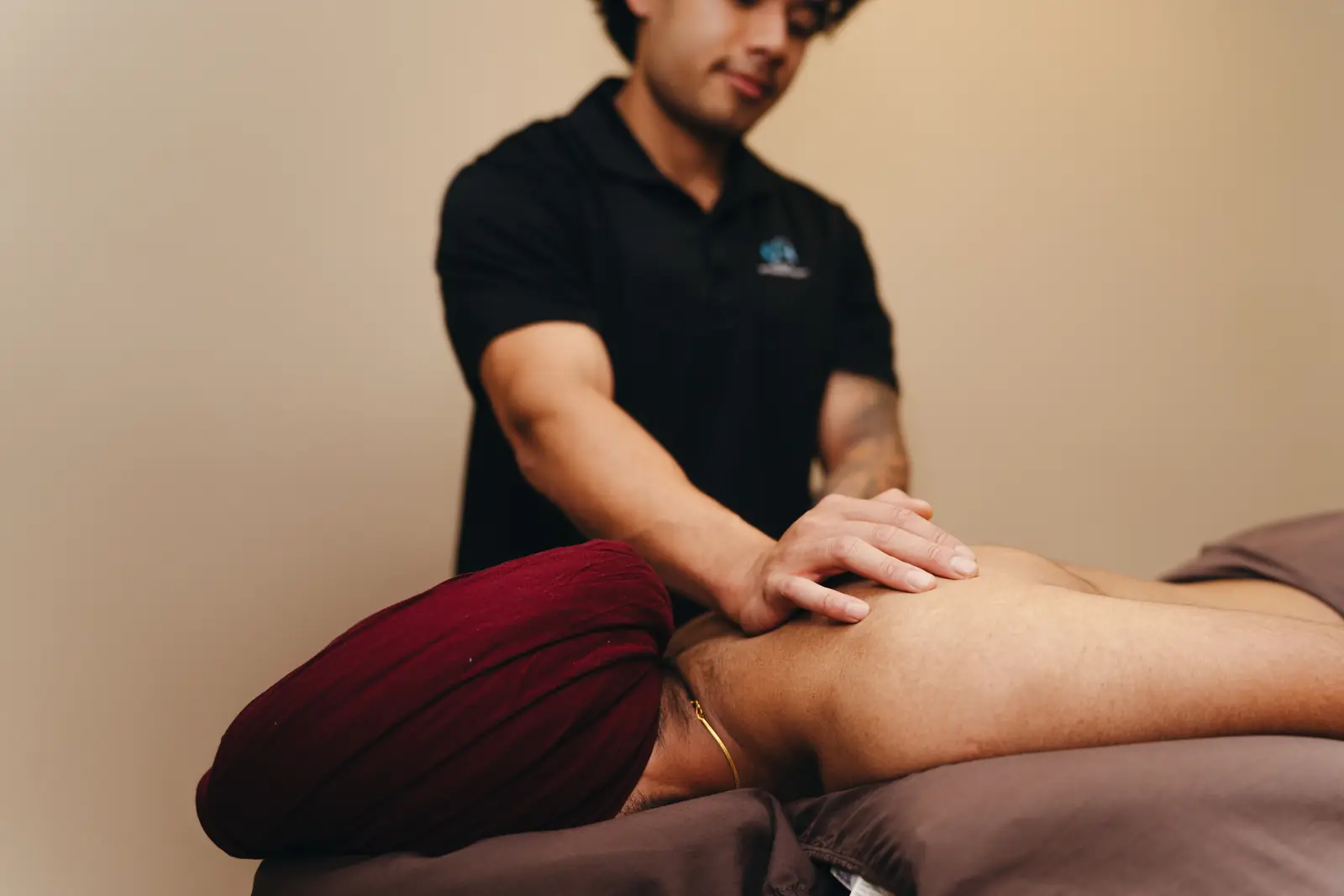
Prenatal and postnatal massage · Abbotsford, BC
Prenatal massage in Abbotsford
Prenatal massage at Altus Integrated Health is registered massage therapy adapted for pregnancy: positioned for comfort at each stage, with a focus on the back, hips, neck and shoulders. Postnatal massage is available too.
- Registered massage therapist with prenatal and postnatal training.
- Direct billing for eligible extended health plans.
- No referral needed. Book online or by phone.
During and after pregnancy
Your body is doing a lot right now
As your belly grows, your lower back and hips work harder to keep you upright. Your shoulders round, your feet swell by the end of the day, and finding a comfortable way to sleep gets harder every month.
After the baby arrives, the load changes but doesn't go away: hours of feeding, lifting the car seat, and carrying a baby on one hip.
Prenatal and postnatal massage is registered massage therapy adapted for these stages, with positioning, pressure and focus changed to suit where you are.
What we commonly see
Where prenatal massage can focus
Every pregnancy is different. These are the areas that most often need attention.
Lower back pain
The muscles of the lower back working harder as your posture changes, especially later in pregnancy.
Hips and buttocks
Tension around the hips and the back of the pelvis as your body prepares for birth.
Neck and shoulders
Rounded shoulders and a tight neck from breast changes, work and awkward sleep positions.
Swelling in the legs and feet
Light strokes for everyday swelling. Sudden or one-sided swelling needs your doctor or midwife first.
After the baby arrives
Neck, shoulder, forearm and back strain from feeding, lifting and carrying.
Leg cramps and tired legs
Gentle work on tired, crampy legs, with pressure kept light because of the higher clot risk in pregnancy.
Positioning
How you'll lie during the massage
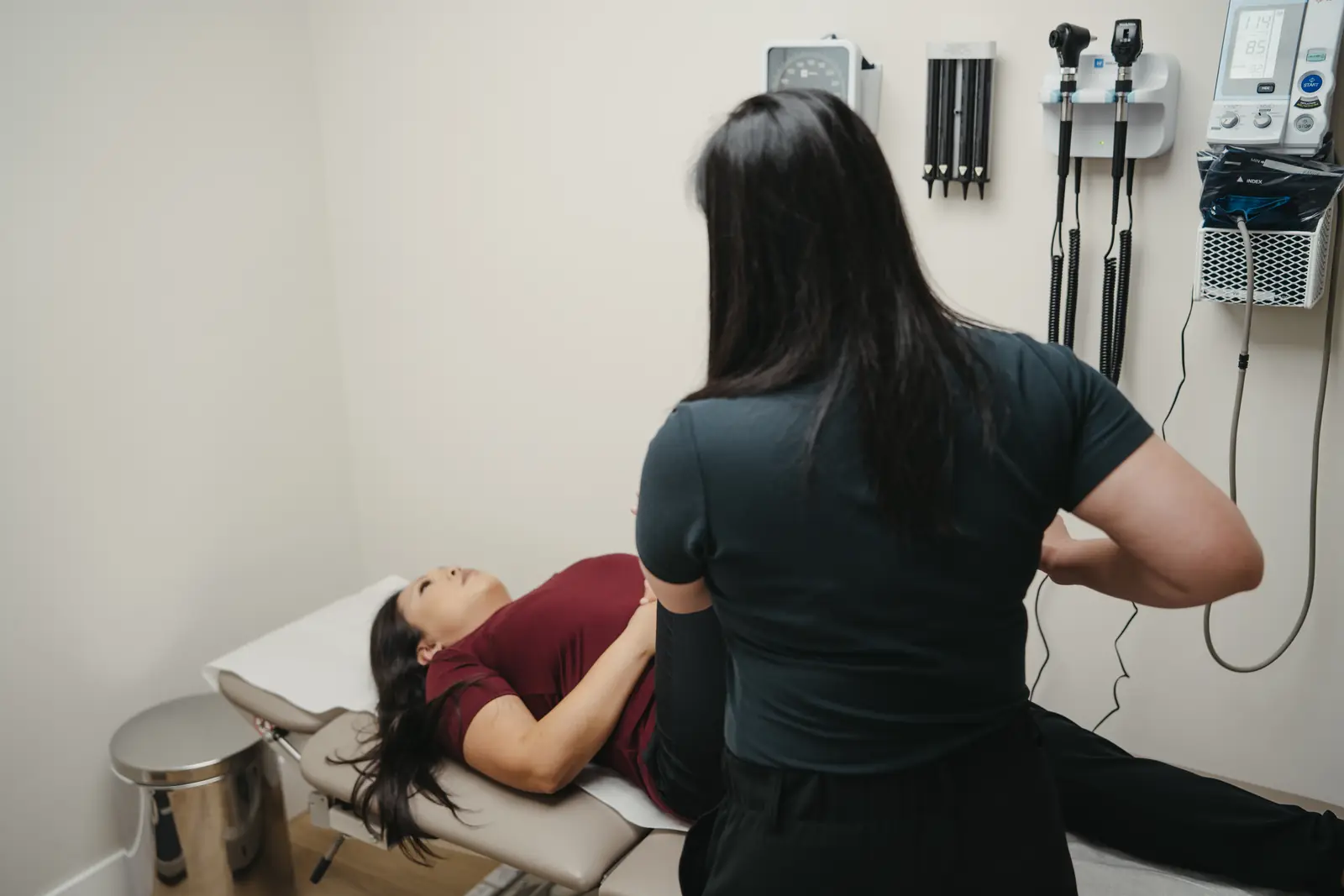
Most prenatal massage is done lying on your side, with pillows supporting your head, belly and knees. A semi-reclined position works well for the neck, shoulders and legs.
Zarah uses pregnancy pillows that leave room for your belly, so in the second and third trimesters many people can lie on their front again. Later in pregnancy, we avoid lying flat on your back for long, because it can leave you light-headed.
You can ask to change position, take a break or use the washroom at any point.
Safety first
When to check with your doctor or midwife
If your pregnancy is high-risk, or you've been told to limit activity, check with your doctor or midwife before booking.
Contact them instead of booking a massage if you have bleeding or fluid loss, regular contractions before 37 weeks, sudden swelling of your face or hands, a severe headache or vision changes, a fever, or pain, redness or swelling in one calf.
Your first visit
What happens when you book
-
01
Book online or call
Ask for prenatal or postnatal massage, and let us know how far along you are or how old your baby is.
-
02
Health history
Your RMT asks about your pregnancy, who's providing your care and what's bothering you, and updates it at each visit.
-
03
Treatment
Hands-on treatment in a supported position, at a pressure you're comfortable with, with no deep work on your belly.
After a caesarean birth, your belly is left alone until the incision has healed. Check with your doctor or midwife before your first postnatal massage.
Our team
Prenatal massage at Altus
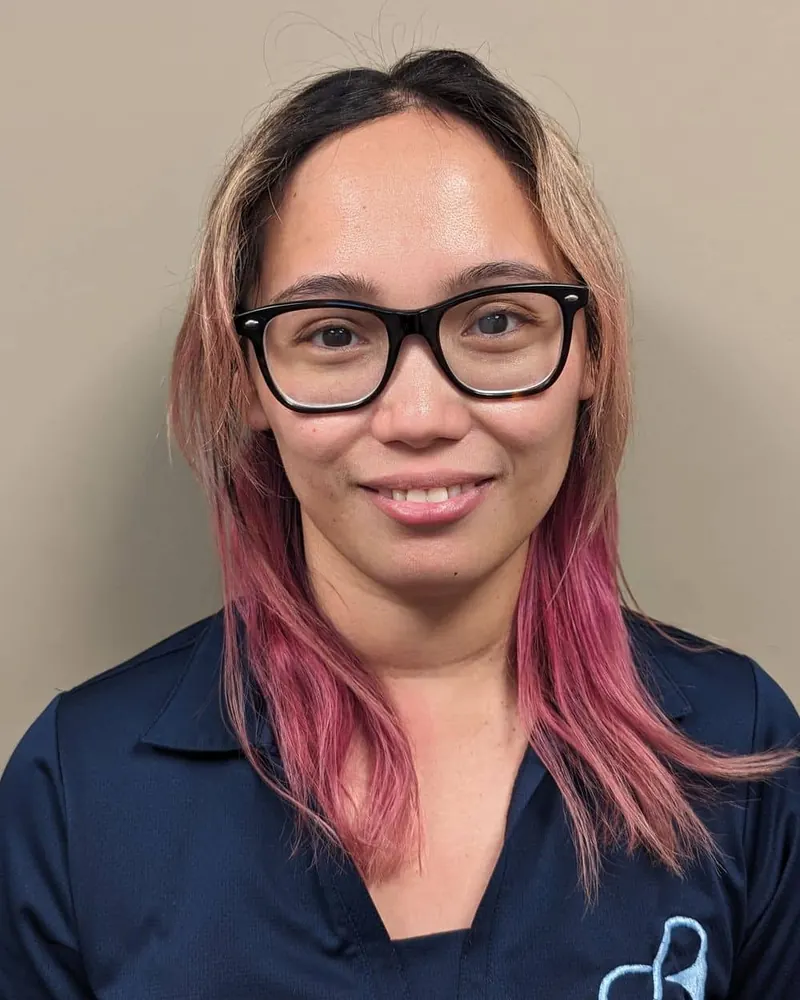
Zarah Jamoralin · Registered Massage Therapist
RMT, West Coast College of Massage Therapy (2021)
Zarah provides prenatal massage at Altus. Her registered massage therapy training included treating prenatal and postnatal patients.
Meet the whole teamPatient Reviews
What our patients are saying
"I've been going to ALTUS Ventura for years for physio, chiropractic care, and massage therapy, and I've always had a great experience. The staff are professional, caring, and knowledgeable. A special shout-out to the front desk team, they are always friendly and do an amazing job with appointment reminders by email, text, and phone. Their customer service is outstanding. Highly recommend!"
"I have been struggling with back and neck pain for years. I have seen many different chiropractors and doctors but none of them were able to resolve my problem. ALTUS has helped me tremendously."
"They took the time to learn more about me and my lifestyle."
FAQs
Prenatal massage questions
Can I get a massage while pregnant?
Yes, in most pregnancies. Prenatal massage by a registered massage therapist is adapted to each stage, with positioning and pressure changed for your comfort. If your pregnancy is high-risk, or your doctor or midwife has advised you to limit activity, check with them first.
How will I lie down during a prenatal massage?
Usually on your side, with pillows supporting your head, belly and knees, or semi-reclined. Zarah also uses pregnancy pillows with room for your belly, so in the second and third trimesters many people can lie on their front. Later in pregnancy we avoid lying flat on your back for long periods.
Can I have a massage in the first trimester?
There's no good evidence that massage by a trained RMT harms an early pregnancy. Tell us how far along you are when you book, and your RMT will talk through what suits you. If anything about your pregnancy is high-risk, check with your doctor or midwife first.
Can massage start labour?
There's no reliable evidence that massage, including pressure on particular points around the ankles or hands, starts labour. Your RMT still keeps pressure on your legs gentle and avoids deep work on your belly.
Is prenatal massage covered by insurance?
Prenatal massage by an RMT is massage therapy, so extended health plans that cover massage usually apply, up to your plan's limits. We direct bill eligible plans. Some plans ask for a doctor's referral, so check yours before your visit.
How soon after giving birth can I have a massage?
Many people can have a gentle massage within days of an uncomplicated vaginal birth. After a caesarean birth, your belly is avoided until the incision has healed. Check with your doctor or midwife first. Breastfeeding isn't a reason to wait; we adjust your position so you're comfortable.
Technical detail
Prenatal and Postnatal Massage Therapy: Positioning, Precautions and Care
Prenatal massage is registered massage therapy adapted for pregnancy, and postnatal massage is the same care adapted for the weeks and months after birth. A registered massage therapist (RMT) changes positioning, pressure and focus to suit each stage: side-lying or front-lying on supportive cushions instead of lying flat, gentler pressure on the legs, no deep work on the abdomen, and attention to the low back, hips, neck and shoulders, which carry much of the strain of a changing body. Treatment starts with a health history that covers the pregnancy, and some symptoms call for a doctor or midwife instead of a massage. Extended health plans that cover registered massage therapy usually cover prenatal massage too. At Altus Integrated Health, registered massage therapist Zarah Jamoralin provides prenatal massage, and postnatal massage is also offered.
How Pregnancy Changes the Body
Pregnancy changes posture, joints and circulation over a matter of months, and those changes explain most of the discomforts that bring people to prenatal massage.
- Posture. As the belly grows, the centre of gravity moves forward. The lower back curve often deepens, and the muscles of the low back and hips work harder to keep the body upright.
- Ligaments and joints. Pregnancy hormones, including relaxin, make ligaments more pliable in preparation for birth. The joints of the pelvis, such as the sacroiliac joints at the back of the pelvis, can feel less stable and more sensitive.
- Upper body. Breast changes add load to the upper back and shoulders, and rounded shoulders often follow. Neck and shoulder tension is common, especially with desk work.
- Circulation and fluid. Blood volume rises during pregnancy, and fluid tends to collect in the lower legs and feet, especially later in the day and in warm weather.
- Sleep and muscles. Finding a comfortable sleeping position gets harder as pregnancy progresses, and many people experience leg cramps at night.
Each person's pregnancy differs. Some people feel few of these changes; others feel several. The RMT's assessment focuses on what the individual client is experiencing at that stage.
Positioning Through Each Trimester
Positioning is the main adaptation in prenatal massage, and it changes as the pregnancy progresses.
- Side-lying. The most common position. Pillows support the head, the belly and the upper knee, keeping the spine and hips level. It gives good access to the low back, hips, shoulders and neck.
- Semi-reclined. The upper body is raised on a wedge or cushions, with a slight tilt to one side. It suits work on the neck, shoulders, arms and legs.
- Front-lying on a pregnancy cushion. Specialised cushions leave space for the belly and breasts, letting some people lie on their front comfortably, often for the first time in months. At Altus, Zarah uses pregnancy pillows so clients in the second and third trimesters can lie on their front.
- Avoiding flat lying on the back. Later in pregnancy, lying flat on the back for long periods can press the uterus on a large vein and leave some people feeling light-headed or nauseated. RMTs use a tilt or another position instead.
Clients can ask to change position, take a break, or use the bathroom at any point. Comfort decides the position, and the RMT adjusts as needed.
What Prenatal Massage Involves
A prenatal massage starts with a health history. The RMT asks how far along the pregnancy is, whether it has any complications, who is providing prenatal care, and what symptoms the client wants help with. The history is updated at each visit, because pregnancy changes quickly.
Treatment then focuses on the areas under most strain:
- Low back and hips. Swedish strokes, gentle kneading and myofascial techniques address tension in the low back, buttocks and hips, worked in side-lying or on a pregnancy cushion.
- Neck, shoulders and upper back. Work on the muscles that tighten with breast changes, posture and sleep positions.
- Legs and feet. Light, flowing strokes rather than deep pressure, especially on the inner thighs and calves, because pregnancy raises the risk of blood clots in the legs. Swelling that appears suddenly, or in one leg only, needs medical assessment rather than massage.
- Abdomen. No deep work. Some clients enjoy very light strokes; many prefer the belly left alone.
Pressure stays within the client's comfort. Some areas of the body feel more sensitive during pregnancy, and the RMT checks in throughout. Hot stone massage is generally not used during pregnancy, because raising body temperature is best avoided.
Postnatal Massage
Postnatal massage addresses the strain of recovering from birth and caring for a newborn.
- Feeding posture. Hours spent feeding, often looking down at the baby, round the shoulders and tighten the neck and upper back.
- Carrying and lifting. Lifting the baby, the car seat and the stroller loads the forearms, wrists, shoulders and low back.
- Sleep disruption. Broken sleep and awkward sleeping positions add to neck and back tension.
- The changing body. Posture and ligaments continue to change for months after birth.
Timing depends on the birth. After an uncomplicated vaginal birth, many people can have a gentle massage within days. After a caesarean birth, the abdomen is avoided until the incision has healed, and checking with a doctor or midwife first is sensible. Breastfeeding is not a reason to avoid massage; positioning is adjusted for comfort, with extra support where needed.
Precautions and When to Seek Medical Care
Prenatal massage suits most pregnancies, but some situations call for a doctor or midwife's advice first, or instead.
Check with a doctor or midwife before booking if:
- The pregnancy is considered high-risk.
- A doctor or midwife has advised limiting activity or bed rest.
- There is a history of preterm labour, or a diagnosis such as placenta previa or preeclampsia.
Contact a doctor or midwife, rather than booking a massage, for:
- Vaginal bleeding or fluid loss.
- Regular contractions before 37 weeks.
- Sudden swelling of the face or hands, a severe headache, or changes in vision.
- Fever.
- Pain, redness, warmth or swelling in one calf, which can signal a blood clot.
Telling the RMT about any change in the pregnancy, at each visit, keeps treatment appropriate. An RMT who has any doubt about the safety of a treatment asks the client to check with their care provider before going ahead.
Key facts
Prenatal Massage Is Adapted To Each Stage Of Pregnancy
Positioning, pressure and focus change from the first trimester to the third. Side-lying and pregnancy cushions replace flat lying, pressure on the legs stays gentle, and the low back, hips, neck and shoulders get the most attention as the body changes.
Later In Pregnancy, Lying Flat On The Back For Long Periods Is Avoided
Lying flat on the back later in pregnancy can press the uterus on a large vein, reducing blood flow back to the heart and causing light-headedness. RMTs use side-lying, a tilt or a semi-reclined position instead.
Some Pregnancy Symptoms Need A Doctor Or Midwife Rather Than A Massage
Bleeding, fluid loss, early regular contractions, sudden swelling of the face or hands, a severe headache, vision changes, fever, and pain or swelling in one calf all need medical assessment. Massage waits until the care provider has seen the client.
Postnatal Massage Focuses On The Strain Of Feeding And Carrying A Baby
After birth, the neck, shoulders, upper back, forearms and low back take new loads from feeding, lifting and carrying. Postnatal massage works on those areas, with positioning adjusted for comfort, healing and breastfeeding.
Many Extended Health Plans Cover Prenatal Massage By An RMT
Prenatal and postnatal massage provided by a registered massage therapist counts as massage therapy under most extended health plans, within the plan's limits. Some plans ask for a doctor's referral, and many set a per-visit or yearly maximum, so checking the plan's wording before the first visit avoids surprises. For eligible BC residents, MSP supplementary benefits also contribute $23 per visit toward massage therapy, up to a combined 10 visits per calendar year. Altus Integrated Health direct bills eligible plans.
Common Misconceptions About Prenatal Massage
Misconception: You Can't Have A Massage In The First Trimester
There is no good evidence that massage by a trained RMT harms an early pregnancy. Some RMTs take extra precautions or prefer to start in the second trimester, often because early pregnancy brings nausea and fatigue. The client's history and comfort guide the decision.
Misconception: Massage Can Start Labour
There is no reliable evidence that massage, including pressure on particular points around the ankles or hands, starts labour. RMTs still keep pressure on the legs gentle and avoid deep work on the abdomen, for comfort and because of the higher clot risk in pregnancy.
Misconception: You Can't Lie On Your Front At All While Pregnant
Pregnancy cushions with space for the belly and breasts let some people lie on their front comfortably, well into later pregnancy. Side-lying remains the most common position. Comfort decides, and the RMT changes position whenever the client asks.
Misconception: Prenatal Massage Is Only A Pampering Treat
Prenatal massage is provided by a regulated health professional, starts with a health history, and addresses pregnancy-related tension in the back, hips, neck and shoulders. Insurance plans that cover massage therapy generally treat it as health care.
Misconception: Postnatal Massage Has To Wait Until You've Stopped Breastfeeding
Breastfeeding is not a reason to avoid massage. Positioning is adjusted, with extra pillows for comfort, and the RMT works around the client's feeding schedule where possible.
Ongoing Debates in Prenatal Massage
The first trimester. Some RMTs treat throughout pregnancy, citing the lack of evidence of harm. Others avoid the first trimester as a precaution, since early pregnancy loss is common and unrelated to massage, and they prefer not to treat during that period. Both positions are found in practice.
Front-lying in later pregnancy. Some practitioners favour specialised cushions that allow front-lying, valuing the access to the back and the relief many clients feel. Others prefer side-lying only, citing comfort and pressure on the belly.
Pressure points. Some traditions warn against pressing certain points on the ankles, hands and shoulders during pregnancy. Others note the lack of evidence that these points affect labour. Many RMTs avoid sustained deep pressure on those areas anyway, as a cautious default.
Lymphatic techniques for swelling. Some practitioners use light lymphatic techniques for pregnancy-related swelling in the legs. Others urge caution until a medical cause, such as preeclampsia or a clot, has been ruled out, particularly if swelling is sudden or one-sided.
Comfort care or musculoskeletal care. Some view prenatal massage mainly as comfort and stress relief. Others place it within broader care for pregnancy-related back and pelvic pain, alongside exercise and advice from other practitioners.
Components of Prenatal and Postnatal Massage Care
Prenatal and postnatal massage care assembles from parts that depend on one another. The health history forms a component of every prenatal assessment, updated at each visit as the pregnancy changes. Positioning forms a component of every prenatal treatment, setting what can be reached comfortably and safely. In the body, the sacroiliac joints form a component of the pelvis that changes during pregnancy, which is why the low back and hips receive particular attention. Communication with the client's doctor or midwife forms a component of care in a high-risk pregnancy. After birth, postnatal massage forms a component of recovery care, addressing the new demands of feeding and carrying a baby.
Summary
Prenatal massage adapts registered massage therapy to pregnancy through positioning, gentler pressure on the legs, no deep abdominal work and a focus on the low back, hips, neck and shoulders. Side-lying, semi-reclined and cushion-supported front-lying positions replace flat lying later in pregnancy. Postnatal massage addresses the strain of feeding and carrying a newborn, with timing guided by the type of birth. Some symptoms, including bleeding, early contractions, sudden swelling and calf pain, need a doctor or midwife instead of a massage. Extended health plans that cover RMT treatment usually include prenatal massage. At Altus Integrated Health, Zarah Jamoralin provides prenatal massage, and postnatal massage is also offered.
More care at Altus
Care that works alongside it
Directions
Two Abbotsford clinics
McCallum Road Clinic
Altus Integrated Health
2168 McCallum Rd #8Abbotsford, BC V2S 6R6
- Mon to Fri9:00 am to 6:00 pm
- Sat and SunClosed
Ventura Avenue Clinic
Altus Chiropractic and Physiotherapy
32920 Ventura Ave #101Abbotsford, BC V2S 6J3
- Mon to Fri9:00 am to 6:30 pm
- Sat9:00 am to 1:00 pm
- SunClosed